
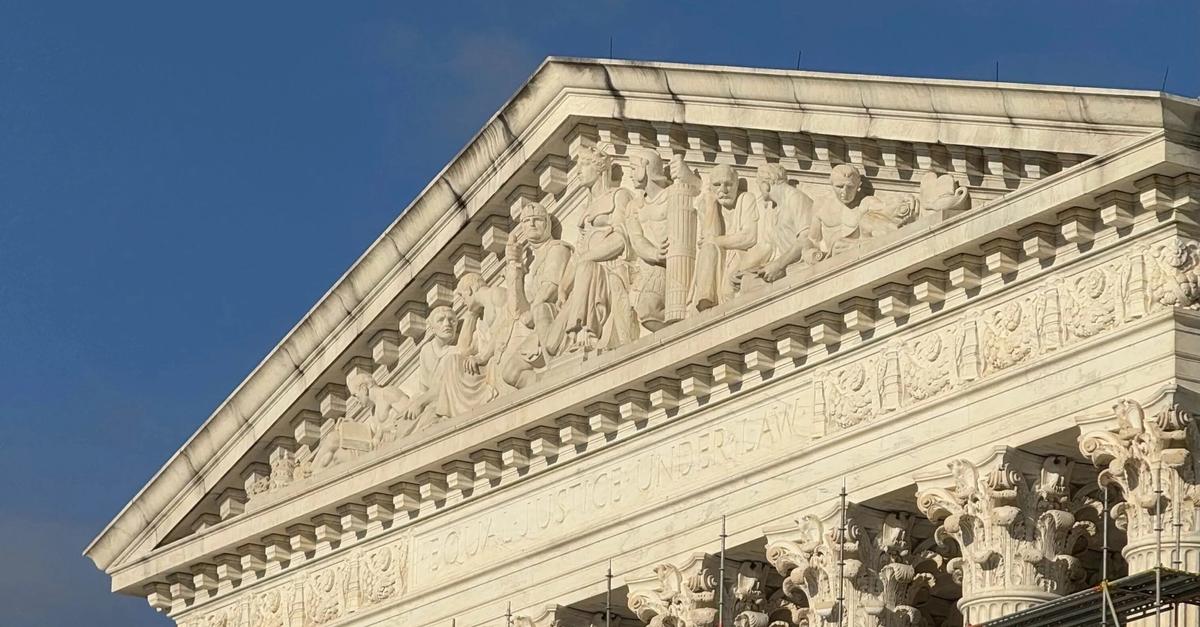
As of this morning, the court has 25 cases scheduled for oral argument in the 2026-27 term. That’s behind where it was at this point last year (31 cases) and in 2024 (27) but ahead of the term before that (21).
Read more The history the court would rather not see
At the Court
In case you missed it, the court released the of three summer order lists on Monday and announced that it will hear argument during the 2026-27 term in Jouppi v. Alaska, an Alaskan bush pilot’s challenge to the forfeiture of his $95,000 airplane over a six-pack of beer. The second summer order list is scheduled to be released on Aug. 17.
Morning Reads
Judicial Ethics Proposals on Financial Conflicts, FOIA Revived
Suzanne Monyak, Bloomberg Law
Sen. Adam Schiff, a Democrat from California, has reintroduced “a trio of bills that would crack down on conflicts of interest and allow public records requests into the federal judiciary, as part of a push to increase transparency in the federal courts,” according to Bloomberg Law. “Two of the bills aim to prevent Supreme Court justices and lower court judges from handling litigation in which they have a financial interest. The measures would expand conflicts of interest rules that apply to the executive branch to the judiciary and require justices and judges to put certain financial assets in a blind trust.” “The Democrat-led bills face slim odds of passage in the Republican-controlled Congress,” but they add to an already active debate over “strengthening ethics rules for the judiciary.” Bloomberg Law noted that “[l]awmakers pressed Justices Elena Kagan and Amy Coney Barrett on the high court ethics code during the justices’ appearances before House and Senate spending committee panels on July 14.”
Trump to Impose 50% Tariff on Many Canadian Goods
Ana Swanson and Ian Austen, The New York Times
On Monday, President Donald Trump “signed orders to impose a 50 percent tariff on a wide range of Canadian goods, … including wine, hockey sticks, cement, dairy products, plywood, paper and furniture,” according to The New York Times. “The new tariffs will be imposed under an obscure legal provision, Section 338 of the Tariff Act of 1930, which Congress wrote as the Great Depression deepened. The law allows the president to put tariffs of up to 50 percent on imports from countries that discriminate against U.S. commerce uniquely, as compared to other countries.” “Administration officials said the taxes were punishment for Canadian discrimination against three U.S. industries: motor vehicles, dairy and alcohol.” The New York Times noted that the Trump “administration is preparing to issue more global tariffs, perhaps as soon as this week,” as it continues to rebuild the tariff regime struck down by the Supreme Court in February.
Want Supreme Court Term Limits? Here’s How to Do It
Jesse Wegman, Major Questions with Jesse Wegman
In a post for his Substack, Jesse Wegman explored the Brennan Center’s “new memo on Supreme Court term limits,” which “makes the case for why Congress has the power” under the Constitution’s necessary and proper clause “to institute term limits through federal statute, no constitutional amendment required.” Congress could impose “18-year terms for justices, followed by a shift to senior status. Senior justices would no longer sit on the nine-member Court. Instead, their duties would change to include sitting by designation on lower federal courts.” “When Congress was in the business of actually using its legislative powers over the Supreme Court, it relied on [the necessary and proper] clause all the time: to set the number of justices, or the Court’s jurisdiction, or the timing of its term, and so on,” Wegman observed, contending that “court reformers should see the Constitution as a friend, not a foe.”
Fifth Circuit to consider whether the federal ban on firearm possession violates the Commerce Clause
Chris Geidner, Law Dork
In a post for his Substack, Chris Geidner highlighted the U.S. Court of Appeals for the 5th Circuit’s decision “to have the full court review the constitutionality of the federal ban on firearm possession by a person previously convicted of a felony” under the commerce clause, rather than the Second Amendment. The announcement comes after Justice Clarence Thomas called for lower courts to take up that question in his solo concurrence in . Indeed, 5th Circuit Judge Stephen Higginson pointed to Thomas as the inspiration behind his colleagues’ order in his opinion dissenting from the order granting rehearing en banc. Geidner, echoing Higginson, described the 5th Circuit’s order as “a wild escalation of how quickly courts are seeking to move the law rapidly to the right.”
The Lines the Court Won’t Cross
Aziz Huq, The Atlantic
In a column for The Atlantic, Aziz Huq reflected on the Roberts court’s relationship with the Trump administration, contending that the court’s rulings against two of President Donald Trump’s “signature policy initiatives, birthright citizenship and global tariffs,” stem not from “a moderate turn” or “sense of true independence,” but from the president’s departure from the court’s “constitutional vision.” That vision, according to Huq, includes “transform[ing] the First Amendment” to reduce restrictions on campaign spending and religious practices, “eviscerat[ing] the equal-protection clause, and recalibrat[ing] the Constitution’s balance of powers” by giving the executive branch more power. “The lesson for the White House from this term is not that the Court is suddenly an adversary,” Huq wrote. “It is that the justices have little patience for impulsive, erratic swerves by a president who will be gone in three years, especially when accommodating his whims undermines their longer-term constitutional vision.”
On Site
The history the court would rather not see
By Daniel Harawa
In his Civil Rights and Wrongs column, Daniel Harawa reflected on the “history-and-tradition test” that the Supreme Court has brought to Second Amendment disputes, contending that it has bred confusion and frustration. This term, Harawa wrote, a case on a Hawaii gun law raised yet another still-unanswered question: What should a court do when the relevant history is morally abhorrent? The court, according to Harawa, “has no clear answer.”
Heller and Bruen are here to stay
By Pete Patterson
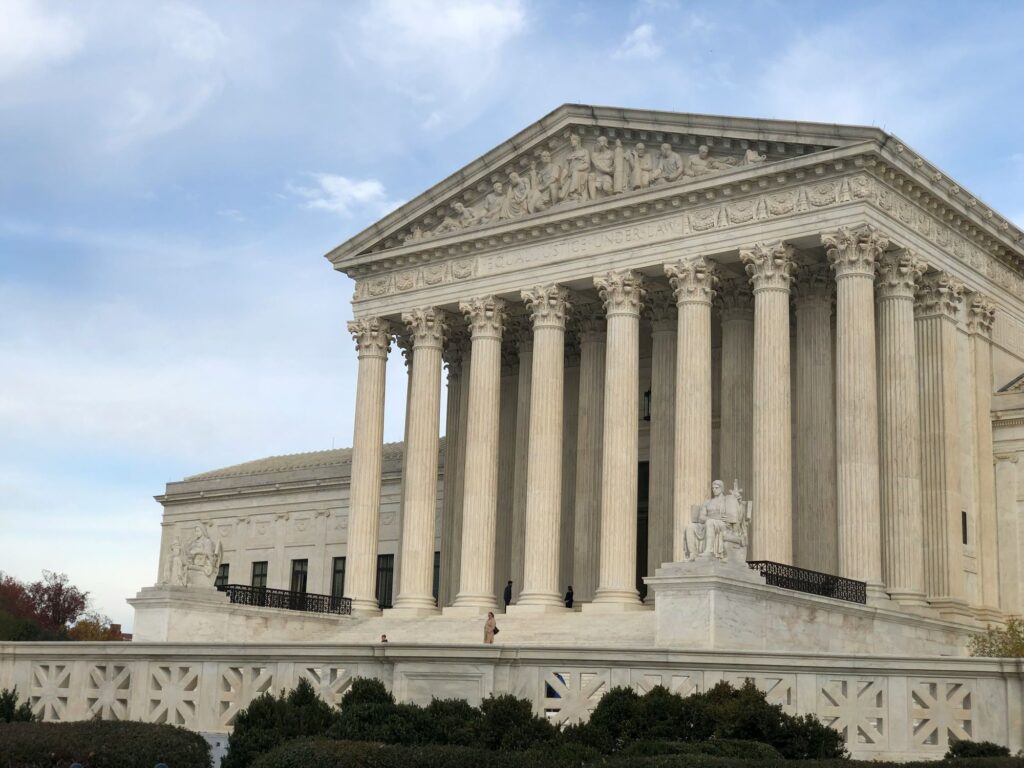
In a column for SCOTUSblog, Pete Patterson analyzed the court’s two Second Amendment rulings from the 2025-26 term, reflecting on how they built on past gun rights cases holding that “the amendment protects an individual right, that the right applies to the states, and that alleged violations of the right are to be assessed by a text-and-history approach.”
Read more Heller and Bruen are here to stay

Podcasts
Defy the Gods
Sarah Isgur and David French discuss Messi flags and The Odyssey in 4D (not IMAX!) before diving into legal topics such as the politics at the Supreme Court, defamation and cancellation at the U.S. Court of Appeals for the 3rd Circuit, and why the Hawaii Supreme Court is wrong.
Ask Amy
Q: The court numerous petitions to rehear cases on Monday. Should we read anything into its failure to act on President Donald Trump’s petition for rehearing in Trump v. Carroll?
A: It’s a fair question. Trump’s original petition for review was first distributed for the justices’ Feb. 20, 2026, conference, but the court rescheduled it a whopping 15 times before it was finally considered four months later, at the June 25 conference, and denied on June 29.
But so far, at least, we can’t read too much into the lack of either a grant or a denial to rehear the petition in Carroll. Although the 19 petitions for rehearing that were were filed over the course of nearly six months, from Jan. 26 to June 17, most of them were filed in May (7) or June (6). And the docket for all of those 19 petitions indicates that they were distributed to the justices’ chambers on June 24.
By contrast, Trump’s was not officially filed until July 8, two weeks after June 24. Moreover, there is no indication on the electronic docket for Trump v. Carroll that the rehearing petition has been distributed yet – or any hint of when it will be.
Once it is distributed, however, the odds that the court will actually reconsider its denial of review are low, with the most recent one dating back to 2018.
SCOTUS Quote
MR. DUNAU: “Now I think Your Honor will find though when your wife goes shopping, she is not just picking up that meat at the counter. She is ringing a little bell when she doesn’t find what she wants and there’s a butcher poking his head through a little cubby hole saying what can I do for you ma’am and she says, I want some kind of a rump roast that’s not here and she gets it that way.”
MR. CLARK: “Well, I have rung those bells and they don’t open many doors.”
— Local Union No. 189, Amalgamated Meat Cutters & Butcher Workmen of North America v. Jewel Tea Co. (1965)
Read more The ripple effects of the TPS ruling