
Tomorrow (Aug. 15) is Justice Stephen Breyer’s birthday. He will be 88.
At the Court
On Thursday, the Supreme Court a request for a stay of execution from Anthony Darrell Dugard Hines, who was sentenced to death for the murder of Catherine Jean Jenkins. Hours later, Hines was executed in Tennessee.
Read more Once upon a time: storytelling in Learning Resources v. Trump
On July 27, the Trump administration asked the Supreme Court on its emergency docket to clear the way for the implementation of President Donald Trump’s executive order on mail-in voting. Twelve states later echoed this request in their own application. Last week, the group of 23 states and the District of Columbia challenging the order the court to deny these requests. On Wednesday, the Trump administration the justices to “promptly” issue their decision.
The court is set to release the second of three summer order lists on Monday at 9:30 a.m. EDT. (We discussed what these lists typically address in our July 13 newsletter.)
Morning Reads
How a Covid-Era Scramble Transformed Supreme Court Arguments
Adam Liptak, The New York Times
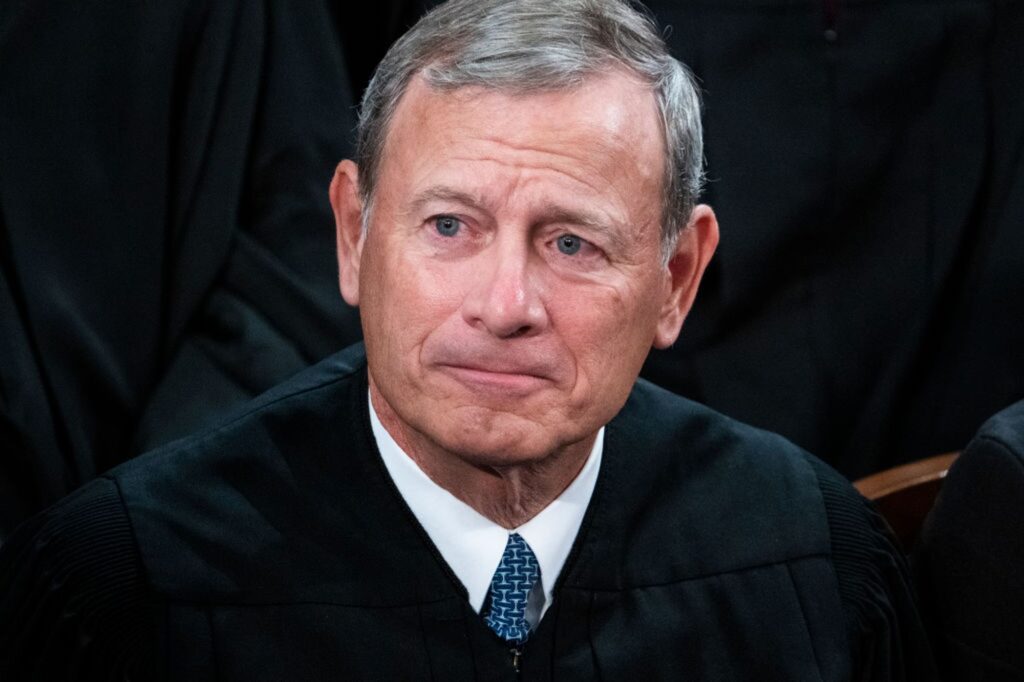
A new study on Supreme Court oral arguments from October 2005 to April 2026 “revealed momentous changes in a cautious institution,” according to The New York Times. Among other shifts, the research highlighted how the average length of argument has expanded in the years since the onset of the COVID-19 pandemic, when the court conducted its arguments by telephone. “Before the pandemic, arguments lasted an hour. Now they are on average nearly 90 minutes,” and the arguments for high-profile cases, such as the dispute over President Donald Trump’s tariffs, sometimes stretch closer to three hours. The study also showed that, although Justice Clarence Thomas speaks more today than he did in the past, he is still the least talkative justice, accounting for just 3% of the justices’ speaking time during the 2025-26 term. Justice Ketanji Brown Jackson, “on the other hand, has emerged as by far the most talkative justice, uttering an average of 1,263 words per case, more than double the justices’ average.” The Times also noted a “striking finding” about Chief Justice John Roberts: The chief “used to speak an average amount,” but “has become almost as taciturn as Justice Thomas.”
Apple App Store Commission-Rate Proceedings Can Move Forward
Leah Nylen, Bloomberg
On Thursday, Justice Elena Kagan denied Apple’s request to pause “a lower-court proceeding over the rate it charges developers for sales outside its App Store” while the Supreme Court considers “an appeal related to a contempt finding in the case,” according to Bloomberg. “The new order, which came without comment, supersedes a temporary pause Kagan imposed Wednesday to allow more time to consider Apple’s request.” The case on Apple’s commission will now continue before U.S. District Judge Yvonne Gonzalez Rogers “simultaneously with the Supreme Court” case, which addresses the circumstances under which a court may hold a party in civil contempt. Rogers held Apple in contempt after ordering the company to allow game developers to use external storefronts for in-app purchases and determining that its decision to charge a 27% commission on such purchases violated that order.
Top Democrat Targets Supreme Court for Changes
Damian Paletta and Maya Davis, The Wall Street Journal
During a Thursday appearance at the National Association of Black Journalists convention, House Minority Leader Hakeem Jeffries, a Democrat from New York, “signaled that Democrats would look to overhaul the Supreme Court if they regain power in Washington,” according to The Wall Street Journal. Jeffries “described the conservative wing of the court as a ‘subsidiary’ of President Trump’s Make America Great Again movement. He said there are a ‘variety of different options [for reform] that are on the table, and I think we can’t foreclose on any single one of them.’” The Journal noted that “Democratic congressional candidates on all sides of the party have criticized the court on the campaign trail, calling for term limits and an end to the 2010 Citizens United ruling that allowed corporations and unions to spend unlimited money on elections.”
Birth Tourism Schemes Targeted by State Department Task Force
Andrew Kreighbaum, Bloomberg Law
On Wednesday, the State Department announced that it launched “a task force to prevent exploitation of visa programs for birth tourism.” The effort draws on “data collected by multiple federal agencies, including the Department of Homeland Security, to review travel histories of foreign nationals entering the US,” according to Bloomberg Law. The new task force is part of the Trump administration’s broader push against “[s]chemes facilitating travel by foreign nationals to the US with the sole purpose of giving birth,” a push that has expanded since the Supreme Court struck down President Donald Trump’s executive order on birthright citizenship on June 30. The State Department said “[t]he task force has already revoked the visas of more than 600 individuals.”
State continues Whittier voter misconduct prosecutions despite landmark U.S. Supreme Court citizenship ruling
Jonson Kuhn, Alaska’s News Source
After receiving “a complaint about noncitizen voting,” Alaska State Troopers in 2024 spoke with residents of Whittier, Alaska, about their citizenship status and ultimately launched a legal battle against an American Samoan family, accusing them of “improperly mark[ing] themselves as U.S. citizens on state voting forms” when they are actually U.S. nationals, according to Alaska’s News Source. The family’s defense team now seeks to have the “felony voter misconduct charges” dismissed, contending “that under the recent U.S. Supreme Court decision in Trump v. Barbara, anyone born on U.S. soil – including U.S. territories like American Samoa – is constitutionally a U.S. citizen under the Citizenship Clause of the Fourteenth Amendment.” In opposing the motion to dismiss, the state did not address the Supreme Court ruling and instead “argued that it is legally sufficient that Congress has historically designated individuals born in American Samoa as ‘nationals, but not citizens, of the United States.’”
On Site
The Supreme Court expands protections for digital data – now what?
By Mailyn Fidler
In a column for SCOTUSblog, Mailyn Fidler revisited Chatrie v. United States, in which the court held that “one’s digital location [is] firmly protected by the Constitution from police searches without a warrant.” The ruling, according to Fidler, “opens the door to a major expansion of digital privacy under the Fourth Amendment. But the nature and extent of this privacy is far from certain.”
Once upon a time: storytelling in Learning Resources v. Trump
By Kendall Gray
In a column for SCOTUSblog, Kendall Gray, who teaches legal writing to law students, explored what makes the Supreme Court’s best writers good at, well, writing, by focusing on Chief Justice John Roberts’ opinion for the court in the tariffs case. He emphasized Roberts’ use of storytelling language and focus on the president as an actor in a narrative, rather than simply on legal principles or statutory text.
Podcasts
This Is Not A Vibes-Only Podcast
David Lat and Zachary Shemtob return as guest hosts and are joined by Adam Feldman, author of the blog Empirical SCOTUS and the Substack Legalytics, to discuss an update on birthright citizenship, some new polling about SCOTUS, and Luigi Mangione, who will soon be tried for the murder of UnitedHealthcare executive Brian Thompson.
Justice Bushrod Washington
While one’s relatives are by no means a guarantee of success, it certainly helped in Justice Bushrod Washington’s case to have the nation’s first president as his uncle.
Read more The Supreme Court expands protections for digital data – now what?
The younger Washington was born in June 1762 in Westmoreland County, Virginia, to Hannah Bushrod and John Augustine Washington, the younger brother of the future president. Said to be the general’s favorite nephew, Washington graduated from William & Mary at 16, then studied law there under the first law professor at an American university, George Wythe, and alongside John Marshall. Washington put his studies aside to serve as a Continental Army private in 1781, although whether he actually watched General Charles Cornwallis surrender at Yorktown depends on whom you ask. His uncle then arranged a Philadelphia apprenticeship with none other than James Wilson, a founder who would eventually serve on the Supreme Court and have snowballing financial problems (to put it mildly).
Back in Virginia, Washington built a busy appellate practice, a volume of Virginia Court of Appeals decisions in 1796, took on law students of his own, including the young Henry Clay, won a House of Delegates seat in 1787, and voted to ratify the Constitution at Virginia’s 1788 convention.
In 1798, Wilson died and President John Adams offered the vacancy to Marshall, who turned it down because he wanted to run for Congress and recommended his friend Washington instead. Adams gave Washington a recess appointment that fall, and he took his oath in November 1798. The Senate confirmed him that December. Washington was the youngest justice yet at age 37 when he took his late teacher’s spot on the bench.
After Marshall became chief justice in 1801, the two voted together so reliably that Justice William Johnson described them as “commonly estimated as one judge.” Exactly how rarely Washington strayed from the chief is somewhat contested (his formal dissents have been counted at one or three).
One of Washington’s best-known opinions came in 1827’s Ogden v. Saunders. Ogden centered around whether a state bankruptcy law could wipe out debts without violating the Constitution’s ban on laws “impairing the obligation of contracts.” Writing for the majority, Washington held that a law already on the books when a contract is signed effectively becomes part of that contract, so applying it at a later time does not impair things. Marshall disagreed, making it the “only constitutional case in which Marshall wrote a dissenting opinion.”
Some of Washington’s heaviest work, though, happened off the court. From 1803 until his death he rode the 3rd Circuit, spending around four months a year holding court in Philadelphia and Trenton (far more than his six annual weeks of Supreme Court work) and adjourning daily at exactly 3:00 p.m., because, as he told one lawyer, if he wasn’t in his wife’s parlor within five minutes of that, “she imagines some evil has happened to me.” While on circuit, Washington decided 1809’s United States v. Bright, in which a Pennsylvania militia general had used armed forces to block a federal court judgment on the state’s orders. Washington held that states cannot resist federal courts at gunpoint. In 1814’s Golden v. Prince, he concluded that only Congress (not the states) could enact bankruptcy legislation.
And then there is 1823’s Corfield v. Coryell, which began as a conflict over who could harvest New Jersey oysters, but ultimately helped define the early reading of Article IV’s guarantee that a state cannot deny citizens visiting from other states the privileges and immunities it extends to its own (relevant for who could work New Jersey’s oyster beds). Washington’s opinion listed the rights he deemed “fundamental,” a citizen’s right “to pass through, or to reside in any other state,” which has been credited with laying groundwork for the Civil Rights Act of 1866 and the 14th Amendment.
Off the bench, Washington inherited his uncle’s papers in 1799 and Mount Vernon itself in 1802, co-producing with Marshall a five-volume biography of George Washington. As his uncle’s executor, he carried out his direction to free those whom America’s first president had enslaved – although he never granted freedom to the many individuals he held in bondage.
Washington died mid-circuit in Philadelphia in November 1829, and his wife Nancy died two days later. Both rest at Mount Vernon.
SCOTUS Quote
MR. McCONNELL: “… Unless there are further questions, I will waive the remainder of my time.”
Read more Trump administration asks SCOTUS to rule soon on mail-in voting
CHIEF JUSTICE ROBERTS: “Thank you, counsel.”
MR. McCONNELL: “Unless it’s an un-waivable right.”
(Laughter.)
CHIEF JUSTICE ROBERTS: “You have no right to time before the court.”
(2011)