
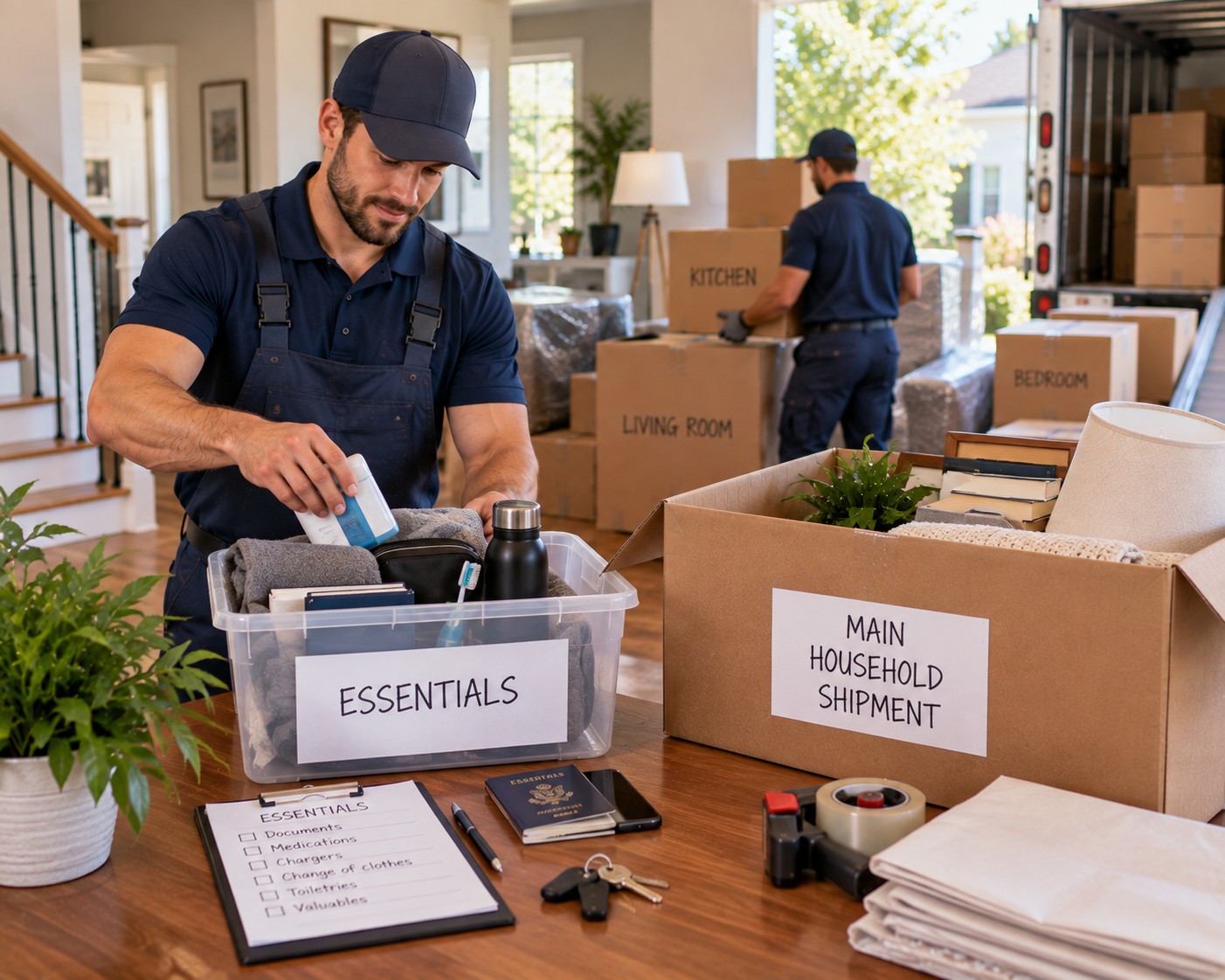
A moving truck can contain nearly everything a household owns, but that does not mean every possession should disappear into the same shipment. Families often need certain belongings immediately after leaving their old home: medication, chargers, documents, toiletries, a few changes of clothes, children’s necessities, or basic kitchen items.
Separating these essentials before the main packing process is complete can make the first days of a relocation considerably easier. Professional hawaii movers can help homeowners establish a practical system so priority belongings remain accessible while the majority of the household is prepared for transportation.
Identifying What Cannot Go Into the Moving Boxes
The first step is distinguishing between possessions that are important and possessions that are immediately necessary. A passport may be important, but it is also something the owner should keep personally rather than place in a moving container.
The same principle applies to valuables, financial documents, keys, jewelry, irreplaceable photographs, and other personal items. These should have a dedicated location under the homeowner’s control.
For broader residential relocation planning, https://hawaiimovingservices.com/residential-moving/ can help customers think about how everyday household belongings fit into the overall moving process.
Creating an Essentials List
A simple checklist can prevent forgotten items. Depending on the household, an essentials group may include:
- Several days of clothing
- Toiletries and personal-care products
- Prescription medications
- Phone and laptop chargers
- Important documents
- Basic cookware or eating utensils
- Children’s or pets’ necessities
- Towels and bedding
- Cleaning supplies for the first day
The exact list depends on how quickly the household expects to settle into the new property.
Building a Separate Essentials Zone
One useful strategy is to establish a dedicated area in the home for everything that should travel separately. This might be a suitcase, several clearly marked bags, or a small collection of containers.
The key is visual separation. Items intended to stay with the family should not be mixed with cartons going onto the moving truck.
Hawaii movers can work more efficiently when customers identify these items before packing begins. It removes uncertainty about whether a particular bag or box should be loaded with the main shipment.
Preparing for the First 24 to 72 Hours
The most useful essentials are not necessarily the things a household uses every day under normal circumstances. They are the things that become important when the new home is not yet fully unpacked.
A family may need coffee supplies, children’s pajamas, pet food, basic tools, or a phone charger before the first moving box is opened. Planning around the first few days helps determine what deserves priority.
Don’t Forget the New Home’s Practical Needs
The destination may require a few additional items. A home that has been vacant could need basic cleaning products, paper towels, trash bags, light bulbs, or simple tools.
If the household is moving into temporary accommodation first, the essentials list should be adapted accordingly. There is little value in carrying a full kitchen setup when the family will not have access to its permanent residence yet.
Labeling Priority Boxes Clearly
If some items must still travel with the movers rather than with the family, clear labeling becomes critical. Labels such as “OPEN FIRST,” “FIRST NIGHT,” or “KITCHEN ESSENTIALS” can help distinguish priority cartons from long-term storage boxes.
A room-based labeling system can also indicate where each box belongs. Combining the room name with a priority designation makes unpacking more systematic.
Professional movers can then place priority cartons where they are easier to identify during unloading, depending on the agreed moving plan.
Keeping Important Items Under Personal Control
Not everything should be handed to a moving crew. Identification documents, cash, jewelry, confidential paperwork, valuable small electronics, and irreplaceable personal objects are generally better kept with the owner.
This approach reduces the number of possessions that need to be tracked through the transportation process and gives the family immediate access to its most sensitive belongings.
Hawaii movers can focus on transporting the household shipment while the customer maintains direct control over the items that should never be separated from them.
A well-designed essentials system ultimately makes a move feel less disruptive. Instead of searching through dozens of sealed cartons for a toothbrush, charger, or clean shirt, the household can arrive with a compact set of necessities already prepared. The main shipment can then be unpacked at a comfortable pace, without turning the first evening in a new home into a hunt for everyday essentials.