
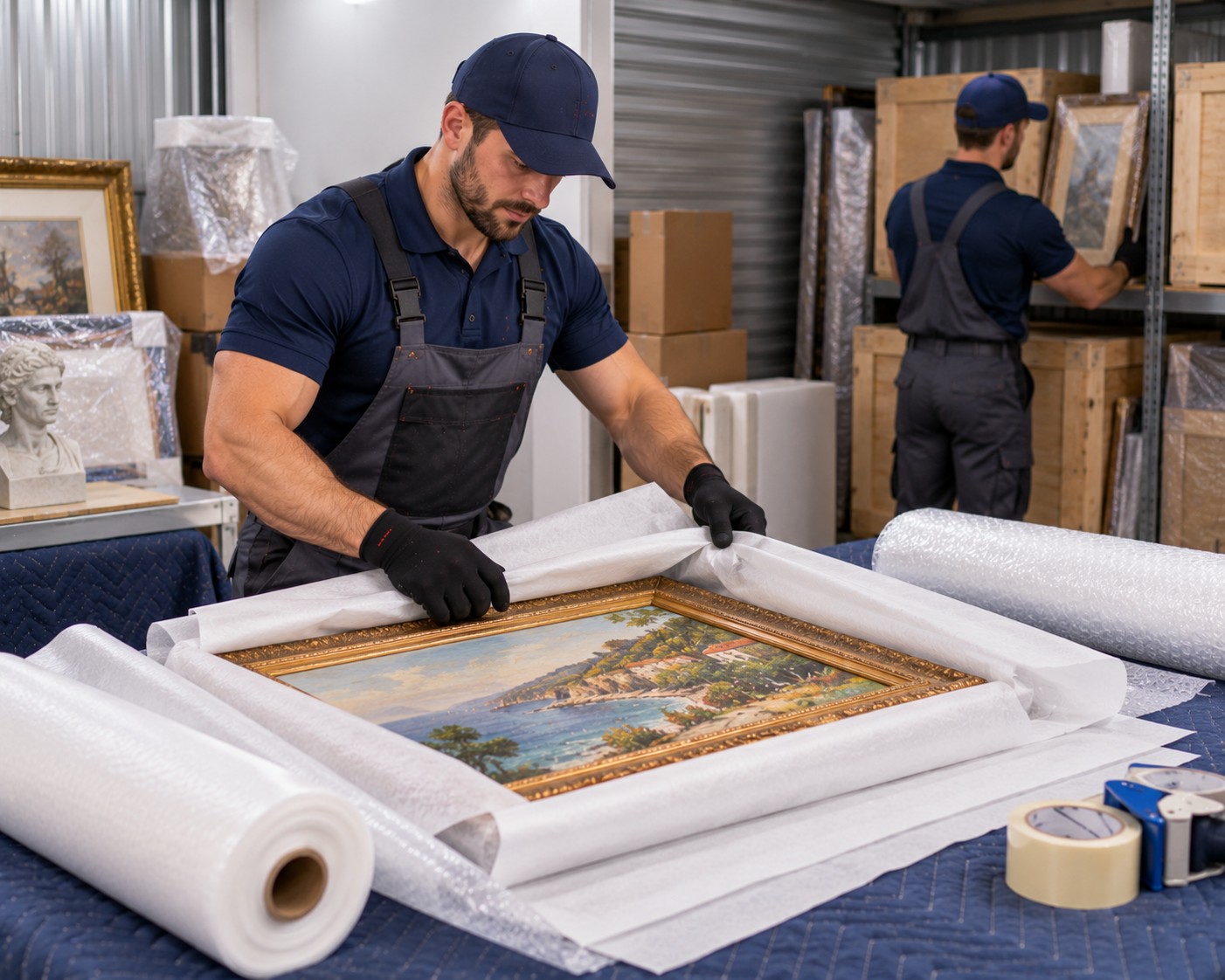
Artwork can spend months or even years in storage, yet the preparation it receives before being placed inside a unit can have a major effect on its condition later. Paintings, framed prints, photographs, sculptures, and mixed-media pieces can all react differently to dust, handling, temperature changes, and physical pressure.
Whether artwork is being stored during a home renovation, relocation, estate transition, or temporary downsizing, preparation should begin before the piece leaves its current room. Pro Movers and Storage can help coordinate the moving process, while https://promoversandstorage.com/ provides access to broader relocation and storage support.
Begin With an Artwork Inventory
Before wrapping anything, document what is being stored. A simple inventory should identify each piece, its dimensions, frame type, and current condition.
Photograph Every Important Detail
Take photographs of the front, back, frame, corners, and any existing imperfections. This creates a useful reference if the artwork is moved again later.
For valuable pieces, record additional information such as artist details, purchase documentation, appraisals, or insurance records. Keep digital copies somewhere separate from the storage unit.
This initial documentation also helps determine which pieces need specialized preparation rather than standard household packing.
Choose Storage Conditions Carefully
Artwork should not simply be placed in the first available storage space. The environment matters, particularly for materials that can react to temperature and humidity fluctuations.
A storage solution designed for sensitive belongings can provide a more appropriate environment than an ordinary uncontrolled space. Details about https://promoversandstorage.com/services/secured-storage-solutions can help when evaluating options for protecting artwork and other valuable possessions.
Think About Long-Term Conditions
Paintings, photographs, wood frames, paper, and certain sculptures can all respond differently to environmental changes. Avoid exposing artwork unnecessarily to direct sunlight, excessive moisture, or unstable conditions.
If a piece has particularly high financial or historical value, consult an art conservator or other qualified specialist about appropriate storage requirements.
Wrap Paintings Without Trapping Moisture
The right protective material depends on the artwork. Clean, dry pieces should be wrapped using materials that protect the surface without creating an overly sealed environment.
Give Frames Their Own Protection
Corners are particularly vulnerable during handling. Use appropriate corner protection before adding a protective outer layer. Framed artwork should also be kept separated from other pieces so that one frame cannot scratch or press against another.
Avoid placing ordinary adhesive tape directly on painted surfaces, frames, or archival materials. Tape should never become the only barrier between a valuable surface and a rough packing material.
For particularly delicate artwork, professional packing may be preferable to improvised household methods.
Keep Artwork Upright When Appropriate
Large framed paintings are often better stored vertically rather than laid flat beneath heavy objects. However, they should never be positioned where they can fall forward or backward.
Use stable supports and maintain enough space around individual pieces. Never lean artwork against an unstable stack of boxes.
Keep Heavy Objects Away
Furniture, boxes, tools, and other heavy belongings should not be placed on top of artwork. Even sturdy frames can bend or develop pressure damage when subjected to concentrated weight for extended periods.
If several pieces are stored together, separate them with suitable protective material and make sure the arrangement remains stable.
Make the Storage Unit Easy to Access
Artwork should not disappear behind an impenetrable wall of furniture and boxes. Leave a practical pathway so individual pieces can be reached without dismantling the entire unit.
Place frequently accessed artwork closer to the entrance and less frequently needed pieces farther inside. Keep an inventory list outside the unit or in a secure digital location so you can identify where each item was positioned.
Pro Movers and Storage can also help with the physical handling of delicate belongings, reducing unnecessary lifting and repeated movement when artwork is being transferred into or out of storage.
Check the Collection Periodically
Long-term storage should not mean completely forgetting about the artwork. When appropriate, inspect the unit periodically and look for signs of environmental problems, damaged packaging, or shifting items.
Do not repeatedly unwrap delicate pieces simply to inspect them if doing so could create unnecessary handling. Instead, monitor the storage environment and exterior condition of protective materials.
Preparing artwork for storage is ultimately about controlling the conditions surrounding each piece. Careful documentation, suitable protection, sensible positioning, and an appropriate storage environment can help preserve both the appearance and value of the collection until it is ready to return to a home, gallery, office, or new owner.