
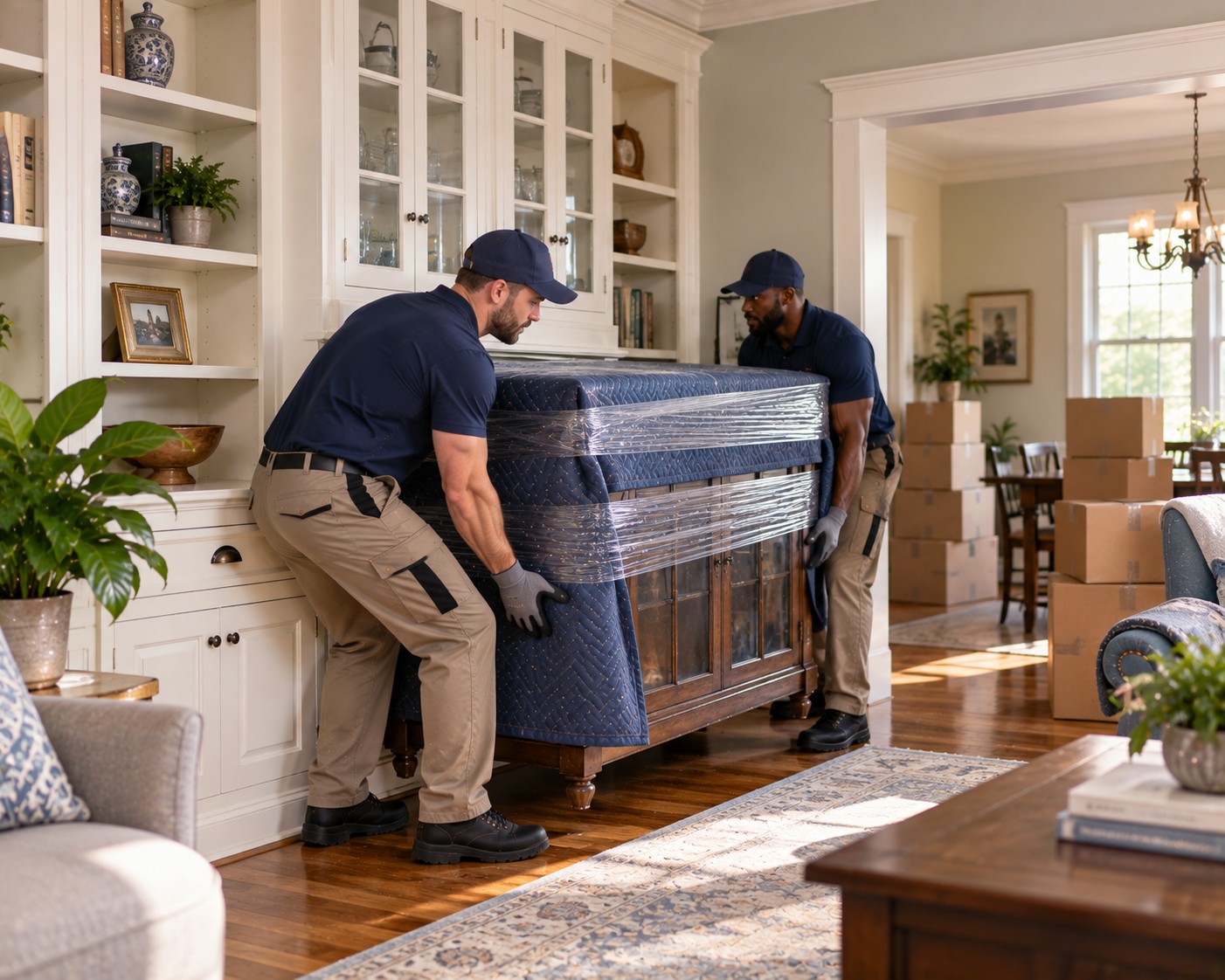
Original built-in cabinets can be one of the defining features of an older Winston-Salem home. Whether they line a dining room, surround a fireplace, occupy a study, or provide storage in a historic hallway, these fixtures often have architectural value that makes them different from ordinary furniture.
The challenge during a relocation is that built-ins are usually designed to remain exactly where they were installed. Their presence changes how nearby furniture is removed, how doorways are approached, and how walls and floors must be protected. Planning ahead allows homeowners to move their belongings without treating these permanent features as obstacles.
Determine What Is Actually Built In
Before moving anything, inspect cabinets carefully. Some pieces that appear permanent may actually be freestanding units secured against a wall, while others are genuinely integrated into the home’s structure.
Look for visible fasteners, trim pieces, molding, wall connections, and unusual gaps. Do not attempt to pull, loosen, or dismantle a cabinet simply to create additional space. If there is uncertainty about whether an item can be detached, consult an appropriate professional before moving it.
This distinction is particularly important when working with older cabinetry. Original woodwork may contain fragile joints, aged finishes, or custom details that cannot be easily replaced.
Photograph the Cabinetry
Take photographs of the cabinets before the move begins. Capture the doors, handles, shelves, trim, surrounding walls, and floor area. Besides documenting their existing condition, these images can help identify which removable components belong to which cabinet.
Remove loose objects from shelves and label them according to their original location. This makes it easier to restore the room after larger furniture has been transported.
Create Clearance Around Permanent Features
Built-in cabinets reduce the amount of maneuvering space available in a room. A large sofa, mattress, wardrobe, or dining table may need to pass close to the cabinetry while being turned toward a doorway.
Measure the available clearance before moving day. Pay attention to cabinet handles and protruding trim, which can catch on furniture or protective materials.
If possible, move smaller pieces away from the cabinets first. This creates a staging area and gives the crew more room to change the angle of larger objects.
For homeowners comparing Movers in Greensboro with local options, the same principle applies: a moving plan should account for the architecture of the property rather than focusing exclusively on the belongings.
Protect the Cabinet Faces and Trim
Even when the cabinets themselves are not being moved, they can be damaged during a furniture relocation. A wardrobe or bookcase can swing into a cabinet door, while a table corner can strike delicate molding.
Use suitable padding to shield vulnerable areas without putting excessive pressure on doors or handles. Avoid attaching adhesive directly to finished wood surfaces.
Protect the floor immediately around the cabinetry as well. Furniture often needs to be rotated in these areas, and grit beneath equipment or footwear can cause scratches.
Prepare Furniture for the Narrowest Point
The largest piece in a room should be evaluated against the most restrictive part of its route. A sofa may fit through the doorway but become impossible to rotate once it reaches a cabinet-lined corridor.
Measure furniture at its widest point and consider whether removable legs, shelves, doors, or drawers can be safely taken off. Keep hardware in labeled bags and photograph each item before disassembly.
Do Not Force an Awkward Maneuver
If furniture barely fits, forcing it through can damage both the item and the home. Stop and reassess the angle, route, or configuration.
A coordinated moving crew can determine whether a different carrying position or partial disassembly provides enough clearance. This is especially useful in historic properties where walls, trim, flooring, and built-in cabinetry may all require additional protection.
Plan the Destination Room Too
If the new home also contains original cabinets, repeat the same inspection before unloading begins. Determine where each piece of furniture will be positioned and whether the available clearance is sufficient.
Movers in Winston-Salem may encounter homes with very different layouts, from older properties with distinctive architectural details to modern residences with more open floor plans. Sharing photographs and measurements ahead of time helps create a realistic moving sequence.
Keep hallways clear, protect cabinet-adjacent flooring, and remove unnecessary decorations before large furniture arrives. If an item needs to be disassembled, have the necessary tools ready before unloading starts.
Preserve the Character of the Home
Original built-in cabinets should be treated as part of the architecture, not simply as another piece of furniture. Careful measurements, protective materials, controlled maneuvering, and advance communication can significantly reduce the risk of accidental damage.
For homeowners arranging a relocation with Movers in Winston-Salem, the objective is not merely to empty the house. It is to move the household while preserving the architectural details that make the property distinctive.