
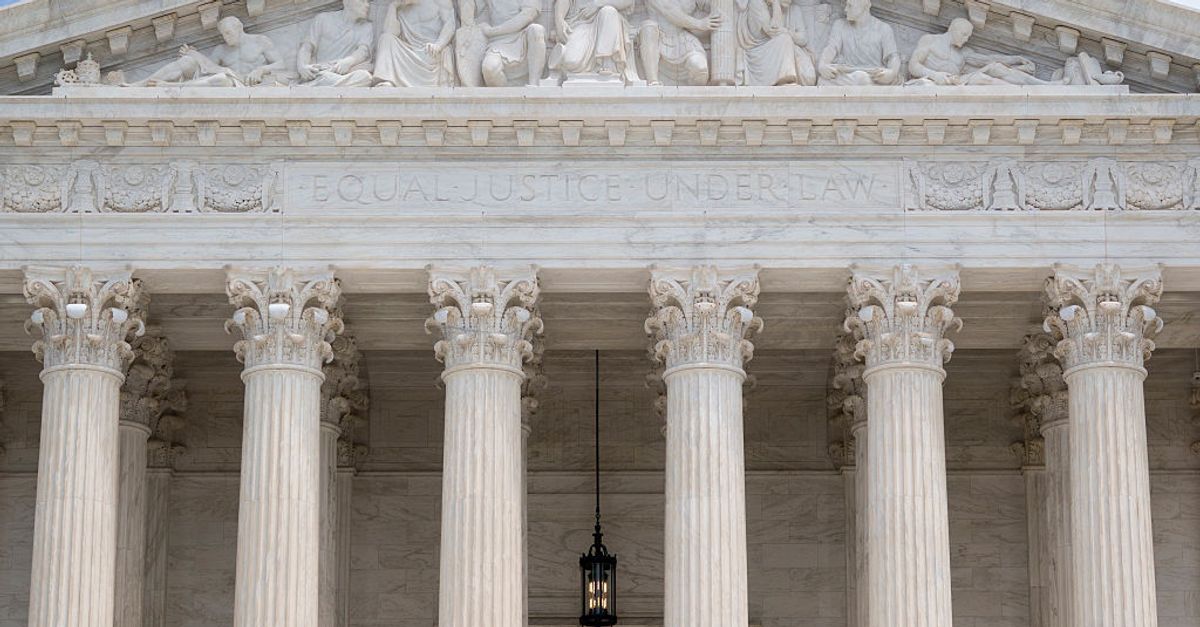
The Supreme Court on Monday gave President Donald Trump sweeping new authority over approximately two dozen multi-member agencies that Congress intended to be independent. By a vote of 6-3, the justices a federal law that bars the president from firing members of the Federal Trade Commission except in cases of “inefficiency, neglect of duty, or malfeasance in office.” That law, a majority of the justices ruled, violates the constitutional separation of powers between the three branches of government. And in reaching that decision, the court overruled its 91-year-old decision in , which had upheld the law at the center of the dispute.
Read more Supreme Court will not consider $5 million verdict against Trump
More broadly, Monday’s decision was a major victory for proponents of the “unitary executive” theory – the idea that the president should have complete control over the executive branch. Under this theory, the president should be able to fire any member of the executive branch, and laws – like the one that the court struck down – that restrict his ability to do so violate the separation of powers. Writing for the majority, Chief Justice John Roberts contended that “the President must have the assistance of officers he can trust. Although it is up to the Senate to decide whether to confirm those with whom the President would prefer to work, neither Congress nor the courts may saddle him with those with whom he cannot work. Subordinates who exercise the President’s power are subject to removal by him. Then, and only then, can they remain accountable to the President, and the President to the people.”
Justice Sonia Sotomayor penned a 49-page dissent that was joined by Justices Elena Kagan and Ketanji Brown Jackson. “Today,” she wrote, “the Court discards” the “democratic regime” created by the Constitution “in favor of one that distorts the structure of Government to fit the majority’s theory of unitary, total executive control. The result,” she concluded, “is a President who emerges with far greater power than ever before.”
The Federal Trade Commission was created more than a century ago. It has five commissioners, no more than three of whom may come from any one political party. Each commissioner is appointed by the president and confirmed by the Senate to serve a seven-year term.
Read more The home stretch
During his first term in office, Trump nominated Rebecca Slaughter to fill one of the Democratic seats on the FTC. Then-President Joe Biden renominated her in 2023 to serve a second term. Last year, the White House notified Slaughter in a letter that she had been “removed from the Federal Trade Commission, effective immediately.” The letter did not cite any of the legal grounds that would allow Trump to fire her. Instead, Trump told Slaughter that allowing her to remain on the FTC would be “inconsistent with my Administration’s priorities.”
Slaughter went to federal court in Washington, D.C., to challenge her firing. U.S. District Judge Loren AliKhan the Trump administration to reinstate her, and a divided panel of the U.S. Court of Appeals for the District of Columbia Circuit the government’s request to pause that ruling while it appealed. Judges Patricia Millett and Nina Pillard wrote that only the Supreme Court could overturn its decision in Humphrey’s Executor, which in their view was “controlling” in Slaughter’s case.
The Trump administration then went to the Supreme Court, asking the justices to freeze AliKhan’s order while litigation continued. Over a dissent by Kagan, joined by Sotomayor and Jackson, the court – effectively permitting Trump to fire Slaughter – and set the case for oral argument in December.