
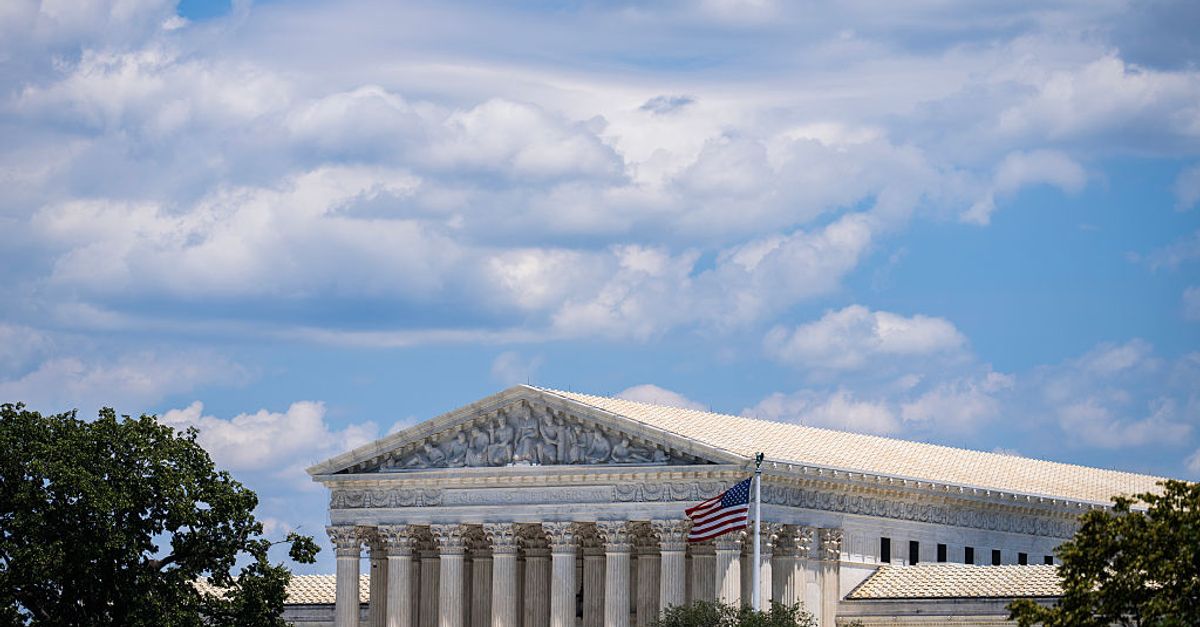
Some provisions of the Constitution enjoy far more attention than others. At the Supreme Court, for example, it is a rare term that doesn’t have a case involving the First, Second, or Fourth Amendments. Yet that is not true for every clause in the Constitution. Today I’d like to cover three such provisions that, despite their profound implications, have generally flown under the court’s radar – the 13th Amendment’s “exception clause,” the guarantee clause of Article IV, and the Third Amendment. Indeed, on the rare occasions where these provisions have come before the court, its treatment of them (or lack thereof) tells us a good deal about how the justices see their role – and how the court responds when finding itself in relatively uncharted constitutional waters.
The 13th Amendment’s exception clause
In 1907, a Black farmworker named Lonzo Bailey signed a contract with the Riverside Company in Montgomery County, Alabama. Under the agreement, Bailey would work as a farm hand for $12 a month in exchange for a $15 advance. When he left before the year was up, however, Alabama arrested Bailey for fraud rather than suing him for a breach of contract. Sentenced to pay a fine of $30 in addition to court costs (which he could not afford), Bailey was ordered by the trial court to perform 136 days of “hard labor” under Alabama’s peonage laws. These laws trapped many, especially former slaves and poor citizens, in a brutal “work-without-pay” system.
Many may think the 13th Amendment, ratified in December 1865 to abolish slavery and involuntary servitude, would prohibit such laws. But, as the amendment itself makes clear, “Neither slavery nor involuntary servitude, except as a punishment for crime whereof the party shall have been duly convicted, shall exist within the United States.” (The Reconstruction Congress borrowed this language almost verbatim from Article 6 of the Northwest Ordinance of 1787, which drew up laws for those newly added territories and stated that “[t]here shall be neither slavery nor involuntary servitude in the said territory, otherwise than in punishment of crimes whereof the party shall have been duly convicted.”)
The exception clause did not go untested for long: in 1871 (six years after the 13th Amendment’s ratification), the Virginia Supreme Court of Appeals decided . Woody Ruffin, a Virginia prisoner, had been hired to work on a railroad. While there, he killed a prison guard in an attempt to escape. In upholding Ruffin’s prosecution, the Virginia court held that a convicted prisoner “has, as a consequence of his crime, not only forfeited his liberty, but all his personal rights except those which the law in its humanity accords to him. He is for the time being the slave of the state.” This (that a person “duly convicted” had no rights left to assert) “reflected a general notion prevailing in the United States through the 19th century that prisoners had no rights” and therefore “lost the protection afforded by state and federal constitutions.”
As for the Supreme Court, its first mention of the exception clause came in a dissent in 1897’s Robertson v. Baldwin. The case involved deserting sailors, not convicted criminals; specifically, federal law allowed officers to seize sailors who left their ships before their contracts ended and return them to service. The sailors, in turn, argued that this violated the amendment’s ban on involuntary servitude. The court disagreed. Although the majority opinion did not mention the exception clause, Justice Henry Billings Brown wrote that a sailor’s contract “has always been treated as an exceptional one, and involving to a certain extent the surrender of his personal liberty during the life of the contract” and that the 13th Amendment was never meant to disturb such practices. Nevertheless, in dissent, Justice John Marshall Harlan directly invoked the exception clause, writing that the amendment “tolerat[es] involuntary servitude only when imposed as a punishment for crime,” and that the majority’s ruling effectively rewrote the amendment “as if it contained an additional clause expressly excepting from its operation seamen.”
But back to Bailey. In 1911, Bailey’s case went before the Supreme Court, which overturned Alabama’s conviction in a 7-2 decision written by Justice Charles Evans Hughes. Hughes held that using criminal punishment to imprison someone based on a contract breach (simply by labeling it fraud) was constitutionally prohibited. As for the exception clause, Hughes found that because the conviction rested on the non-performance of labor, it could not be used to justify compelled service. To rule otherwise, Hughes held, would allow any state to circumvent the amendment – and thereby restore slavery or involuntary servitude – simply by attaching a criminal label to the breach of a labor contract.
By the 1940s, the court was applying Bailey’s reasoning to strike down a wave of similar Southern “labor fraud” statutes. In 1942’s Taylor v. Georgia, for example, the court invalidated a Georgia law under which, as Justice James Byrnes wrote, a worker who received a loan he could not repay had “to remain at his employment until the debt ha[d] been discharged.” And in 1944’s Pollock v. Williams, Justice Robert Jackson, writing for the court, made clear that a Florida law allowing failure to perform contracted labor as evidence of fraud violated Bailey and Taylor’s holdings.
More recently, the Supreme Court ruled on the substance of the 13th Amendment in 1988’s United States v. Kozminski, which asked whether psychological coercion to perform labor could violate the amendment. The case arose after members of the Kozminski family, who owned a dairy farm in Michigan, had recruited two intellectually disabled men to work for them. The men were initially paid $15 per week, but later were denied pay, worked for 17 hours a day, and did not have their basic needs such as food and shelter met. The Kozminskis told the men that they could not leave the farm and they should not contact outsiders. After a herdsman alerted officials of the men, officials arrested the Kozminskis, who were found guilty of holding the men in involuntary servitude. The question before the court was whether the trial court had incorrectly included psychological coercion under the definition of “involuntary servitude.”
To determine what the authors of the 13th Amendment meant by “involuntary servitude,” Justice Sandra Day O’Connor, writing for the majority, looked to the exception clause. Given that the clause bans involuntary servitude unless the government uses it to punish a convicted criminal, and that punishment is composed of legal consequences (such as a criminal sentence) and physical restraint (such as a jail or prison) – not psychological coercion – the 13th Amendment was meant only to involve legal or physical force, O’Connor reasoned. One scholar interprets O’Connor’s language in Kozminski as simply reinforcing the exception clause by holding that the “express exception” for criminal punishment applies directly to involuntary servitude as a punishment for a crime.
Lower federal courts have also engaged with the exception clause, although none of these cases have reached the Supreme Court. The U.S. Court of Appeals for the 9th Circuit ruled in 1963’s Draper v. Rhay that – based on the plain text of this clause – there is “no federally protected right of a state prisoner not to work while imprisoned after conviction.” The U.S. Court of Appeals for the 5th Circuit paralleled this ruling in the 1988 case of Wendt v. Lynaugh, dismissing a prisoner’s forced-labor claim as frivolous, since a duly convicted prisoner’s situation is “in precise words … exempted from the application of the Thirteenth Amendment.” And in 1992’s Vanskike v. Peters, the U.S. Court of Appeals for the 7th Circuit denied that Illinois prisoners were “employees” entitled to minimum wage under the Fair Labor Standards Act; in doing so, it held that prison labor did not qualify as “employment” because such work was not the product of a settled exchange but “stem[s]… from incarceration itself” and fit within the clause’s carve-out for involuntary servitude.
Although it has generated relatively little case law, the exception clause has not gone unnoticed by Congress. A resolution reintroduced in the Senate in June 2023 would cut the exception clause from the amendment entirely, although there has been no notable movement on this. Meanwhile, numerous states have removed this exception from their own constitutions, beginning with Colorado in 2018 and most recently Nevada in 2024, with voters in such states as Alabama, Oregon, Tennessee, and Vermont approving measures in 2022.
The guarantee clause
The text of Article IV, Section 4 states that “[t]he United States shall guarantee to every State in this Union a Republican Form of Government.”
By the early 1840s, Rhode Island still had never replaced its colonial charter that dated to 1663 with a state constitution. The charter imposed property requirements that “strictly limited suffrage and made no provision for amendment.” In response, Thomas Dorr organized a movement that drafted and ratified a new state constitution. He was elected governor in 1842. When the existing government refused to recognize Dorr’s election, however, he rebelled and his supporters took up arms and attacked the arsenal in Providence. The group was put down and Dorr was arrested, later convicted of treason. A supporter named Martin Luther sued a state official who entered Luther’s house to detain him for backing Dorr. In that property dispute over two types of “doors,” the Supreme Court was asked to hold, for the first time, what the Constitution’s promise of republican government required of a state.
The court punted. Instead, in the 1849 decision of Luther v. Borden, Chief Justice Roger Taney held that questions arising under the guarantee clause were effectively non-justiciable; in other words, they were political, rather than judicial, questions, as courts lacked the institutional competence to determine what, exactly, constitutes a “republican government.” Two decades later, in Texas v. White, the court revisited the clause in the context of Reconstruction. Chief Justice Salmon Chase held that the power to carry out the guarantee of republican government “is primarily a legislative power, and resides in Congress” – affirming that it was Congress, and not the courts, who would organize and recognize new republican governments in the defeated Confederate states. And in 1912’s Pacific States Telephone & Telegraph Co. v. Oregon, the court relied on Luther to reject a challenge to Oregon’s ballot-initiative system as, again, a “nonjusticiable” political question.
About two decades later, in 1962’s Baker v. Carr, the Supreme Court did not set out to address the guarantee clause. The case arose from a challenge to Tennessee’s process for legislative apportionments, which had been static since 1901, and (according to the challengers) left urban voters underrepresented and thus violated the equal protection clause of the 14th Amendment. Before the court could address that question, however, it was first asked to answer whether such a challenge implicated the guarantee clause. Perhaps unsurprisingly (given its reluctance to deal with the guarantee clause in general), the Supreme Court rejected that framing, holding that the claim rested instead on the equal protection clause.
Read more The public’s view of the Supreme Court
In 1992, the court returned to the guarantee clause in a rather unlikely setting: a federalism dispute over radioactive waste. In New York v. United States, New York challenged a federal law which required states that didn’t arrange for the disposal of such waste within their borders to take ownership of that material and assume liability for any damages that it caused. New York argued – among other things – that this effectively made it subordinate to a federal regulatory program and denied the state a republican form of government in violation of the guarantee clause.
Justice Sandra Day O’Connor wrote for the majority, rejecting New York’s guarantee clause argument: the challenged provisions, she reasoned, did not deny New York a republican form of government, because, according to the court, the provisions simply pressured the state’s policy choices without altering its form of government. In doing so, she also acknowledged – although without elaborating – that “perhaps not all claims under the guarantee clause present nonjusticiable political questions,” offering a signal that the court might be willing to hear a guarantee clause challenge in the future rather than outright dismissing it as nonjusticiable.
The guarantee clause was considered most recently in 2019’s Rucho v. Common Cause, in which voters in North Carolina and Maryland argued that partisan gerrymandering violated the Constitution. The North Carolina plaintiffs alleged that Republican legislators had drawn maps to explicitly produce favorable results for Republicans, no matter how the state voted, and the Maryland plaintiffs alleged a similar case against Democrats. Both sets of plaintiffs grounded their substantive arguments in the First Amendment (challenging the drawing of districts based on retaliation for political beliefs), the equal protection clause, and the elections clause. In a 5-4 decision, Chief Justice John Roberts held that “partisan gerrymandering claims present political questions beyond the reach of the federal courts.”
In reaching that conclusion, Roberts addressed the guarantee clause, as the lower court in North Carolina had held that the gerrymander violated “the core principle of republican government … namely, that the voters should choose their representatives, not the other way around.” In response, Roberts wrote that such an argument was “more properly grounded” in the guarantee clause, which he then declared to be (you guessed it) nonjusticiable. Justice Elena Kagan read her dissent aloud from the bench in June 2019 for 13 minutes, in what Slate described as “for the stoic justice, remarkably impassioned.” “For the first time ever,” she said, “this court refuses to remedy a constitutional violation because it thinks the task beyond judicial capabilities … These gerrymanders dishonored our democracy … With respect but deep sadness, Justices Ginsburg, Breyer, Sotomayor, and I dissent.”
Whether the guarantee clause may have some life in it, as O’Connor suggested, or will remain a dead letter, as Roberts seemed to indicate, remains an open question.
The Third Amendment
In April and May 1979, a statewide strike by correction officers in New York prompted Gov. Hugh Carey to activate the National Guard to operate the state’s prisons. At the Mid-Orange Correctional Facility in Warwick, New York, two officers – Marianne Engblom and Charles Palmer – were subsequently evicted without notice or hearing from their on-site residences, which were then occupied by the National Guard. Engblom and Palmer filed suit under 42 U.S.C. § 1983, contending that the state had violated their Third Amendment rights.
The Third Amendment states that “No Soldier shall, in time of peace be quartered in any house, without the consent of the Owner, nor in time of war, but in a manner to be prescribed by law.” This was of particular concern to James Madison when he drafted the amendment, given the forced housing of British troops throughout the colonies’ history (which was listed as a specific grievance in the Declaration of Independence).
Despite its historical importance, however, the Third Amendment has seen practically no court action – either in the Supreme Court or below. Indeed, in deciding Engblom v. Carey, the U.S. Court of Appeals for the 2nd Circuit accurately noted that this was “the first time a federal court [was] asked to invalidate as violative of the Third Amendment the peacetime quartering of troops ‘in any house, without the consent of the Owner.’” The 2nd Circuit also noted that, aside from the district court’s opinion in that very case, “there are no reported opinions involving the literal application of the Third Amendment.” And with a practically blank slate to write on, the circuit court made several rulings. First, it held that National Guardsmen qualify as “soldiers” under the amendment; second, on-site employee housing constitutes a “house”; third, that protection extends to lawful tenants, not only property owners; and fourth, the amendment applies to the states via the 14th Amendment. Ultimately, the 2nd Circuit did not decide whether New York had actually violated the plaintiffs’ rights, and the Supreme Court has never had the opportunity to interpret the amendment.
Which is not to say the Third Amendment has made no appearance in Supreme Court opinions. In 1965’s Griswold v. Connecticut, which held that the Bill of Rights guarantees a certain right to privacy (and in doing so struck down a Connecticut law prohibiting contraceptives for married couples), Justice William Douglas cited it, alongside the First, Fourth, Fifth, and Ninth Amendments, as evidence of this right. In 1967’s Katz v. United States, which held that the Fourth Amendment “protects people, not places,” Justice Potter Stewart listed the Third Amendment in a footnote as “[an amendment that] protects another aspect of privacy from governmental intrusion.” And in 1972’s Laird v. Tatum, a challenge to the army’s domestic-surveillance program targeting civilian political activity, the Supreme Court, although it dismissed the case for a lack of standing, invoked the Third Amendment as an expression of “a traditional and strong resistance of Americans to any military intrusion into civilian affairs,” with its prohibitions reflecting “philosophical underpinnings” that “explain our traditional insistence on limitations on military operations in peacetime.” As one legal scholar has put it, the Third Amendment has thus most often “serve[d] as a frequent supporting example – a reliable ‘see also’ to points about the Second, Fourth, and Fifth Amendments,” with the Third Amendment’s protections themselves “undefined and untested.”
A more recent attempt to bring a Third Amendment claim before a federal court came in 2013, when the Mitchell family of Henderson, Nevada, sued the city after police officers forcibly occupied their home to gain a tactical advantage during a domestic violence incident next door. The Mitchell family alleged that “the officers ‘quartered themselves in [their home] without their consent, violating their rights guaranteed by the Third and Fourteenth Amendments of the United States Constitution.’” The federal district court dismissed the Third Amendment claim, “holding that municipal police officers are not ‘soldiers’ within the meaning of the Third Amendment.” This was not appealed, however, and the broader lawsuit continued on other grounds.
Scholars are mixed on whether the Third Amendment has any meaningful applications that the Supreme Court should recognize beyond its narrow historical context. As one has observed, “Today, because the U.S. military has a sprawling network of bases and ships around the world to house its soldiers, the need to physically quarter troops in private homes is, for the most part, obsolete.” Yet others argue that the amendment’s underlying concerns remain relevant given “modern technology” that “allows the military to monitor civilian life and enforce laws, creating nearly identical privacy and property concerns as the physical quartering of soldiers.” And some have pointed to the question of a militarized police force, asking whether today’s police officers qualify as “soldiers” under the Third Amendment, which would dramatically expand its reach.
So what?
These three provisions, all similarly undefined by the Supreme Court, are nevertheless not alike in the reasons for their dormancy. The 13th Amendment’s exception clause has surfaced in scattered litigation and the Supreme Court has at times interpreted its scope. The guarantee clause has been brought up somewhat more frequently, but largely in the context of why the court will not consider it. And the Third Amendment has generated almost no judicial determinations at all for most of its 234-year existence.
Whether one views the court’s restraint in each of these areas as a recognition that not every constitutional provision requires, or should require, judicial review – or as a failure to faithfully apply the text of the Constitution – what is undeniable is that they involve fundamental questions for a constitutional democracy: Whether the government may compel individuals to labor against their will, whether citizens are guaranteed a substantive say in who governs them, and whether the state can occupy private property for its own purposes. Perhaps they will not remain dormant forever.
Read more Reactions to Kagan and Barrett’s congressional testimony