
We are expecting 23 more opinions in argued cases by early July. In case you missed it, Amy wrote last week about the most important cases yet to be decided.
At the Court
Orders from the justices’ June 4 conference are expected this morning at 9:30 a.m. EDT.
The court has indicated that it may announce opinions on Thursday at 10 a.m. EDT. We will be live blogging that morning beginning at 9:30.
Morning Reads
Trump administration tells appeals court White House ballroom project must continue
Mike Scarcella, Reuters
On Friday, the U.S. Court of Appeals for the District of Columbia Circuit heard argument on a challenge to “construction of a $400 million ballroom on the site of the White House’s demolished East Wing.” A lawyer for the Trump administration told that court that construction has “gone too far to be stopped” and that “courts have no role in weighing the project,” according to Reuters. A lawyer from the “National Trust for Historic Preservation, a nonprofit group that campaigns to protect significant American sites,” countered that “the president has no ‘free-floating’ power to build without appropriations.” “The panel, which heard arguments for more than two hours, could issue a more significant ruling in the next few weeks, which could be appealed to the U.S. Supreme Court.”
Seventh Circuit keeps journalists barred from Indiana executions
Destiny Devooght, Courthouse News Service
On Friday, the U.S. Court of Appeals for the 7th Circuit “upheld an Indiana law disallowing media access to witness state executions, finding the First Amendment does not guarantee special access to press,” according to Courthouse News Service. A group of news outlets, including the Associated Press, had argued that the First Amendment allows access for journalists in executions in a lawsuit filed “after the state resumed executions following a 15-year break.” But “the panel’s majority found that the news outlets’ right of access argument – based on the Supreme Court’s recognition of a limited right to access certain governmental proceedings – stops short of applying to executions” because executions don’t “resemble a court proceeding.”
How The Supreme Court Is Tightening Early Prison Release
Jamiles Lartey, The Marshall Project
In The Marshall Project’s Closing Argument newsletter, Jamiles Lartey reflected on recent Supreme Court rulings on the First Step Act, which passed in 2018 with bipartisan support and which enables “incarcerated people to take their compassionate release claims” – that is, claims presenting an “extraordinary and compelling reason” to release them from prison early – “directly to a judge” rather than awaiting action from the Bureau of Prisons, as they had to do in the past. The First Step Act “hardly opened the floodgates, but it did lead to a roughly 20-fold increase in successful release motions.” However, in two May rulings, the court “tighten[ed] the mechanisms of compassionate release in the federal system,” holding “that compassionate release cannot be used to revisit doubts about a conviction, or to reduce a sentence that would be considered excessive by today’s penalties.”
The Supreme Court Refutes Its Critics
The Wall Street Journal Editorial Board
In a June 4 editorial, the Wall Street Journal Editorial Board contended that the Supreme Court’s rulings in favor of a generic pharmaceuticals manufacturer, the SEC, and the FCC “refute” the idea that justices are trying to “curry[] favor with ‘moneyed interests.’” The court is not “in the pocket of corporate interests” or “on a mission to ‘gut’ the administrative state,” as critics have contended, the Editorial Board wrote. “No, the Justices are applying the law and precedents as they read them.”
Outrage Over Justice Alito’s Son Distracts From Real Scandals
Gabe Roth, Bloomberg
In a column for Bloomberg, Gabe Roth, the founder and executive director of Fix the Court, highlighted the outrage that followed when NOTUS broke the news on May 28 that Justice Samuel Alito’s son is working in the Treasury Department. Some claimed that Alito should have recused himself from the tariffs case even though, as Roth noted, “he didn’t need to under the court’s legal and ethical framework.” According to Roth, this and other recent debates over recusals involve overstated scandals and “distract from the necessary work of reform,” which he believes should focus on issues like the “justices’ acceptance of gifts.”
On Site
Justices validate SEC’s use of disgorgement in securities enforcement
By Ronald Mann
In Sripetch v. SEC, the court validated the SEC’s ability to use “disgorgement” to force a wrongdoer to turn over its profits to the government without showing harm caused to the wrongdoer’s customers.
Justices reject holding generic pharmaceutical manufacturers liable for decisions of pharmacists about prescribing their products
By Ronald Mann
On Thursday, the court decided Hikma Pharmaceuticals USA v. Amarin Pharma, which was argued on April 29. The opinion of Justice Ketanji Brown Jackson for a unanimous court rejected the idea that a generics pharmaceutical manufacturer (Hikma) can be held responsible for infringements of patents held by the branded manufacturer (Amarin) based on the decisions of doctors and pharmacies to use the generic compound for patented uses of the drug.
Read more Justices validate SEC’s use of disgorgement in securities enforcement
On D-Day, did FDR violate the establishment clause?
By Jordan Lorence
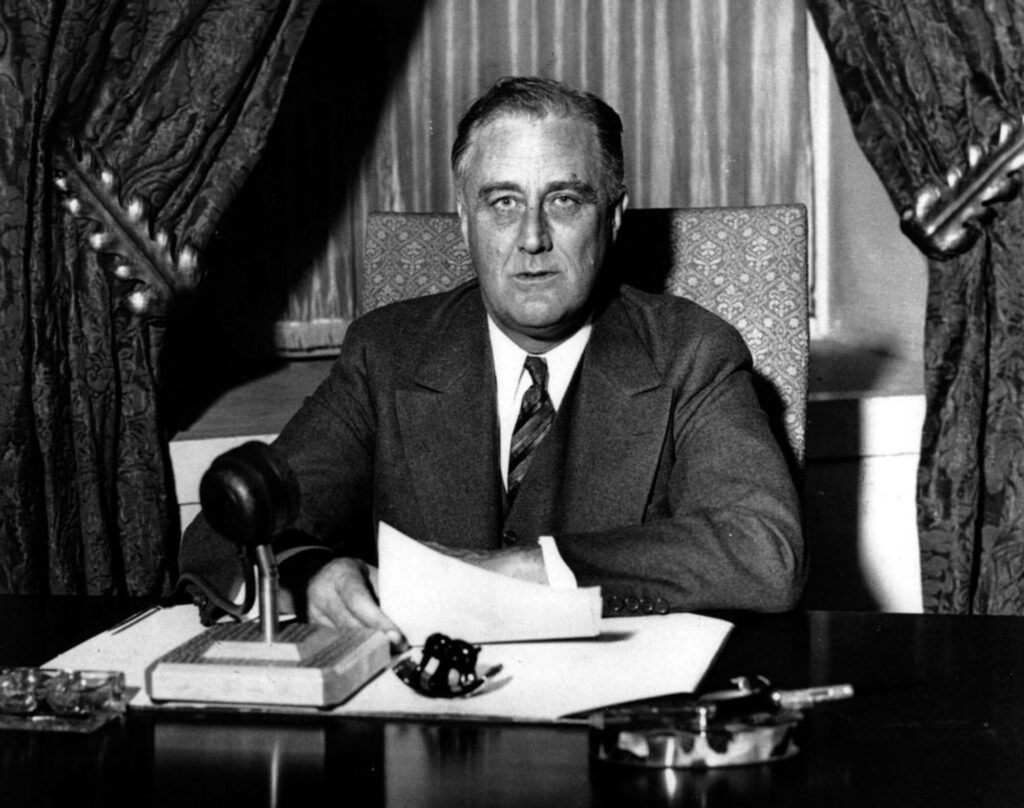
Late in the day on June 6, 1944, following a day of fierce combat between Allied troops and Nazi forces on Normandy’s beaches, President Franklin Delano Roosevelt shared a prayer with the nation and urged Americans to ask for God’s support in the war. In a column for SCOTUSblog, Jordan Lorence revisited Roosevelt’s prayer and reflected on the country’s shifting understanding of the proper relationship between church and state.
Podcasts
Getting Out of the Redistricting Business
Sarah Isgur and David French discuss the Supreme Court’s Alabama redistricting decision, a plea deal from the former national security adviser, and the best legal movies ever made.
Opinion Assignments
As we enter peak opinion-release season, we thought it’d be a good idea to discuss how the justices typically choose who writes which opinion. This is a very big deal: Whoever writes the opinion, after all, gets to control the narrative.
The most senior justice in the majority gets to assign the author of that opinion (so if the chief is in the majority, it’s always him), and he or she can either assign it to him or herself or another justice who that person thinks will be able to get the most votes behind the majority opinion. This was not always the case. Before Chief Justice John Marshall’s appointment in 1801, the court followed the seriatim tradition, in which each justice wrote and delivered a separate individual opinion. Marshall recognized that the seriatim approach created uncertainty about the legal principle for which a decision stood and diminished the court’s ability to establish authority without an institutional voice. So he persuaded his colleagues to adopt a single written “opinion of the court,” and that has effectively been the case ever since. (President Thomas Jefferson, for his part, complained in one letter that under Marshall, the court’s opinions were delivered “huddled up in conclave, perhaps by a majority of one” and shielded by “the silent acquiescence of lazy or timid associates.”)
The justices decide who will write which opinion after they vote in conference. The goal is to make this as equitable as possible: chief justices have thus tended to assign to each justice about the same number of opinions. But assigning opinions is also strategic: the assigning justice might choose someone whose views align closely with the majority’s reasoning, or alternatively assign it to a justice whose vote seems uncertain, hoping the responsibility will sway his or her commitment to the majority position. And chief justices have long reserved the highest-profile cases for themselves. According to an analysis of Roberts’ tenure by Linda Greenhouse back in 2014, he authored 25 of the 85 most salient opinions in which he was in the majority, or about three times more than he would have written under an even distribution (which is consistent with most chief justices before him).
By custom, a new justice’s first opinion assignment is typically in a deliberately uncontroversial case, and all of the other justices then make an effort to join it. When Justice William Brennan issued his first decision in 1956 (an 8-1 tax ruling) the lone dissenter, Justice John Harlan II, wrote him a private note saying he was “sorry” that he could not “sign up at once with your first.” More recently, Justice Sonia Sotomayor’s first opinion drew a concurrence from Justice Clarence Thomas that criticized the court’s practice of using “value judgments,” while Justice Elena Kagan’s first was met with a dissent from Justice Antonin Scalia. It is not clear if they received written (or oral) apologies.
SCOTUS Quote
JUSTICE KAGAN: “If he had cocaine in his sock, he would probably be convicted of possession of cocaine.”
MS. KOVNER: “But –”
JUSTICE KAGAN: “He was convicted of paraphernalia here because he had four pills of Adderall, which if you go to half the colleges in America, people – you know, and just randomly pick somebody, there would be a decent chance –”
Read more On D-Day, did FDR violate the establishment clause?
— (2015)