
We’re now just three weeks away from our term-in-review event at Johns Hopkins University Bloomberg Center, which will take place on July 8 from 2:30 to 5:30 p.m. EDT. The event will feature a fireside chat with the ACLU’s Cecillia Wang, who argued the birthright citizenship case before the Supreme Court; a live taping of the Advisory Opinions podcast; and a discussion of the historical framework of birthright citizenship from Johns Hopkins professor Martha S. Jones. To register your interest in attending, sign up here.
At the Court
On Tuesday, Haitian citizens the court to dismiss without deciding a dispute over the Trump administration’s effort to end their participation in the Temporary Protected Status program. For more on the filing, see the On Site section below.
The court has indicated that it will next release opinions tomorrow at 10 a.m. EDT. We will be live blogging that morning beginning at 9:30.
After any opinion announcements tomorrow, the justices will meet in a private conference to discuss cases and vote on petitions for review. Orders from that conference are expected on Monday, June 22, at 9:30 a.m. EDT.
Morning Reads
Orthodox Jew asks Supreme Court to hear case after city allegedly targeted his home prayer group
Kristine Parks, Fox News
Daniel Grand, a Jewish man who lives in Ohio, “is asking the U.S. Supreme Court to revive his lawsuit” against city officials in University Heights, who interfered with his plan to host a prayer group in his home in January 2021. “After a neighbor learned of the planned gathering and complained to city officials, Grand received a cease-and-desist letter, and then-Mayor Michael Dylan Brennan told him he would need a special-use permit to comply with local zoning rules governing religious assemblies,” according to Fox News. In his lawsuit, “Grand argues the city discriminated against him based on religion, saying officials would not have objected to a secular social gathering at his home. … However, a federal district court and a subsequent appeals court dismissed key portions of the case as unripe, ruling that he had not completed the city’s permitting process or obtained a final zoning decision before suing.” In his petition for review, Grand asked the Supreme Court “to clarify whether local governments can issue credible threats that chill religious exercise, force homeowners to a public land-use approval process for private prayer and avoid judicial review by later changing their positions.”
Jury service builds trust in courts as public confidence erodes
Gabriel Tynes, Courthouse News Service
New research highlights declining public trust “in the U.S. judiciary, particularly the Supreme Court,” and points to a unique solution: jury service. The researchers determined that “people who have served as jurors within the past five years viewed state courts as more legitimate, reported higher overall trust in courts and rated judges more positively on traits such as trustworthiness, fairness and competence,” according to Courthouse News Service. However, the study also noted that fewer Americans have a chance to serve on a jury today than they did in the past “amid a sharp drop in jury trials.” “With jury opportunities dwindling, the study authors call for expanded, lifelong civic learning about the courts and government.”
Study finds law grads are ‘stacking’ judicial clerkships, curtailing opportunities for others
Karen Sloan, Reuters
A new study shows that “[j]udicial clerkship ‘stacking’ – where law graduates complete two, three, or even four coveted clerkships with sitting judges before entering the legal workforce – is increasingly shrinking the pool of clerkships available to others,” according to Reuters. “The federal judicial clerkship has evolved from a brief detour into a mini career,” the study’s three authors explained. Their new report built on earlier research showing that “while some Supreme Court clerks in the 1980s were hired right out of law school, today’s high court clerks on average arrive with more than two prior clerkships.”
The Supreme Court Might Fix Something for Once
Matt Ford, The New Republic
In a column for The New Republic, Matt Ford celebrated the Supreme Court’s decision to take up Kian v. Florida, a case on the constitutionality of six-person juries. Ford contended that such juries are a remnant of the Jim Crow-era, when some southern states sought to “eliminate Black civic and political participation.” “The stage is now set for the Supreme Court to further strengthen one of the great bulwarks of American liberty—in the few states, at least, that have gotten away with diminishing it for so long,” Ford wrote.
Why the Supreme Court is fighting over deadly gas and firing squads
Ian Millhiser, Vox
In an analysis for Vox, Ian Millhiser reflected on the significance of two recent Supreme Court decisions in favor of men on death row. Last week, in Lovelace v. Lee, the court declined to stay or vacate a lower court ruling barring Alabama from executing Jeffery Lee with nitrogen gas. And last month, “the justices decided not to decide Hamm v. Smith,” “thus leaving in place a lower court ruling saving a man from execution” because he was determined to be intellectually disabled. Millhiser concluded that it is “too soon to tell” whether the court is growing less supportive of the death penalty, but contended that “Lovelace should give death row inmates, their loved ones, and capital defense lawyers some hope that, even if they cannot save these inmates’ lives, they may be able to make their executions less brutal.”
On Site
Haitian citizens ask justices to throw out dispute over whether Trump administration properly ended protected status for them
By Amy Howe
A group of Haitian citizens who are beneficiaries of a program that allows them to stay in the United States came to the Supreme Court on Tuesday, asking the justices to throw out a dispute over whether the Trump administration can end the program, known as Temporary Protected Status, for Haiti. The justices heard oral arguments in the case in late April, but the Haitian citizens told the court on Tuesday that it should toss the case without deciding it – a procedure known as “dismiss as improvidently granted” – based on “newly discovered facts [that] bear directly on the merits of” their claims.
Nine days in June
By Erwin Chemerinsky
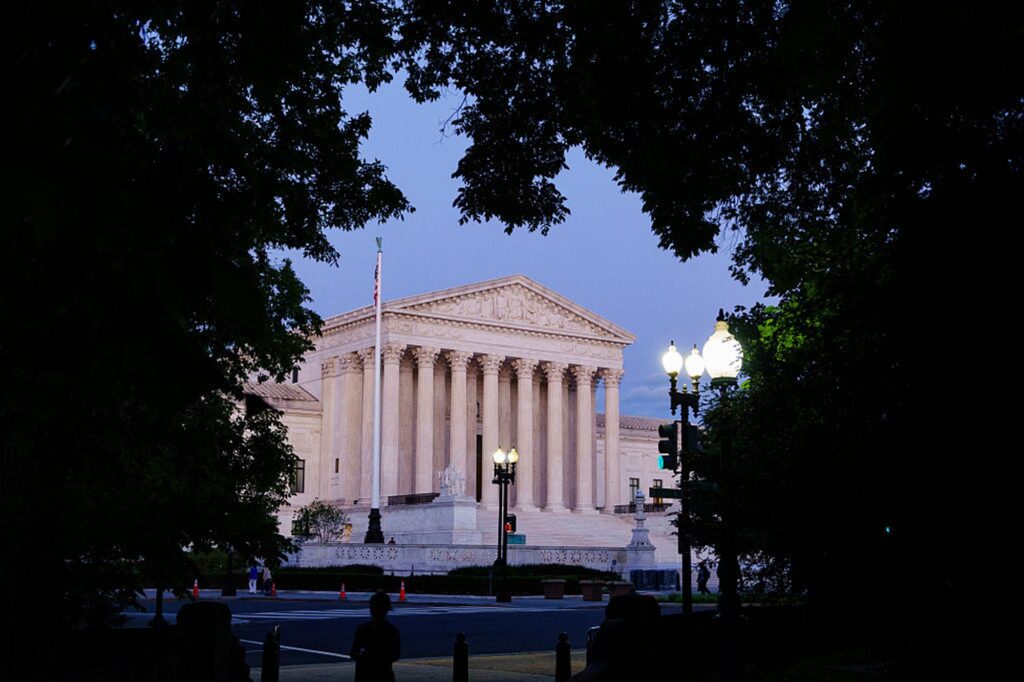
In his Courtly Observations column, Erwin Chemerinsky revisited what he believes to be “the most extraordinary June in the modern Supreme Court,” examining a nine-day period in June 2022 during which “the court overruled Roe v. Wade, greatly expanded the scope of gun rights, dramatically weakened the wall separating church and state, and imposed a significant new limit on the power of federal administrative agencies.”
Read more How Supreme Court precedents die before they are overruled
How Supreme Court precedents die before they are overruled
By Adam Feldman
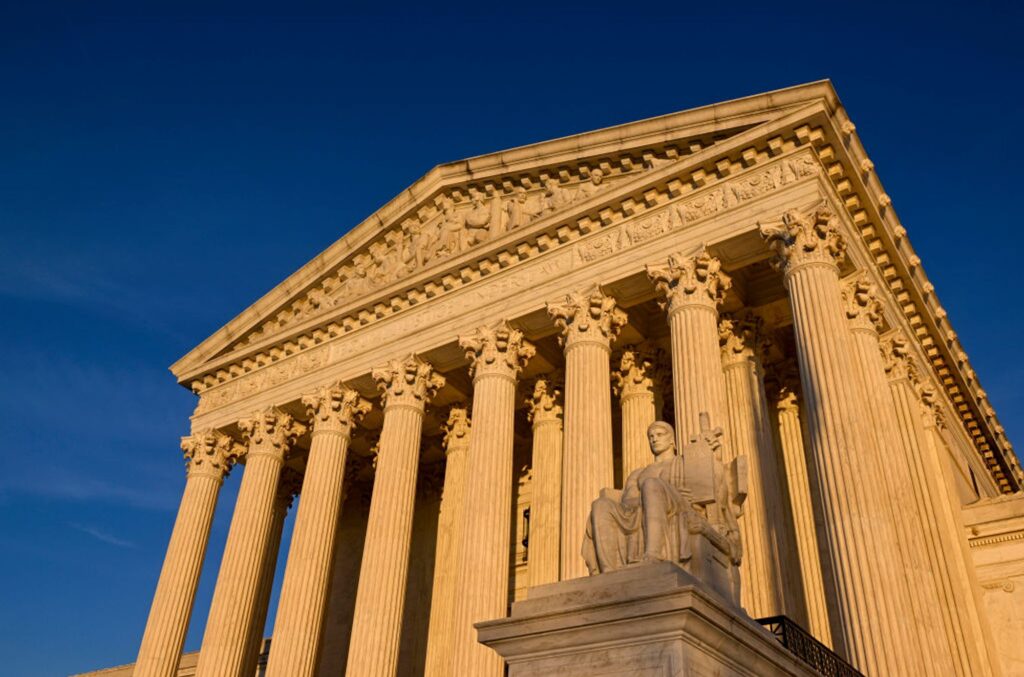
In his Empirical SCOTUS column, Adam Feldman explored the process by which certain Supreme Court precedents have lost authority over time without being formally overruled. Instead, they were “narrowed, distinguished, criticized, or confined” to their facts, and treated “as a problem to be managed,” rather than “as a rule to be applied.”
Podcasts
The Trump Administration’s Internal Arguments Over Habeas Corpus
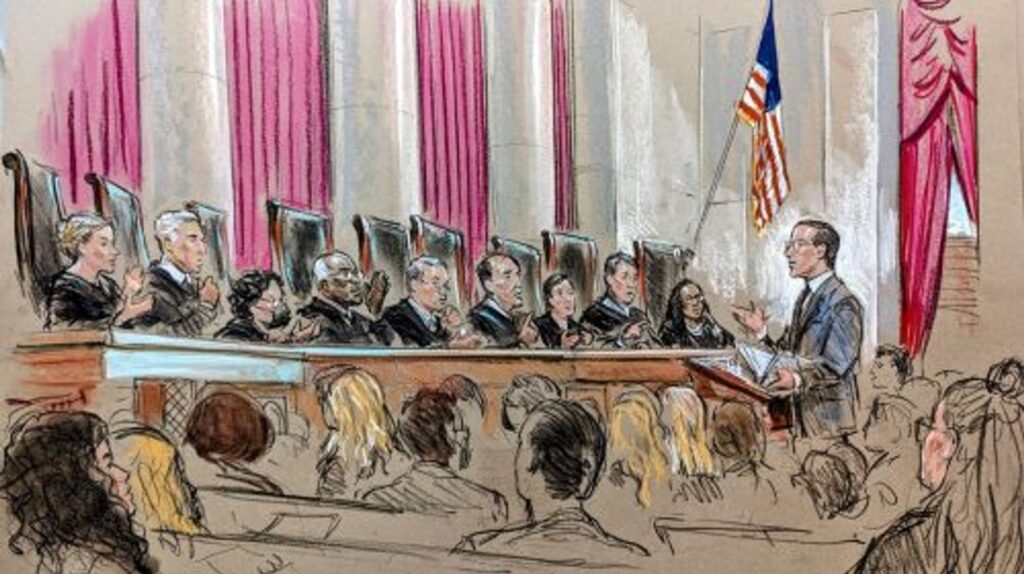
Sarah Isgur and David French break down the most recent cert grants out of the Supreme Court’s order list and President Donald Trump’s argument for suspending habeas corpus.
Per Curiam Opinions
Although most opinions have a specific justice assigned as their author, that is not always the case. As court watchers are well aware, a decision can be “per curiam” – in which the court does not identify which justice wrote it. Last term, for example, the court issued 11 per curiam opinions on the merits docket.
Per curiam is a Latin phrase which translates to “by the court.” Historically, per curiam opinions were understood to indicate that a particular case was “uncontroversial, obvious, and did not require a substantial opinion.” Accordingly, these opinions were typically no more than a few sentences long and did not have separate concurrences and dissents authored by individual justices.
In the early 1900s, that began to change when Justice Oliver Wendell Holmes Jr. authored the first dissent from a per curiam opinion in the 1909 case of . The per curiam opinion called the questions raised “essentially the same” as those of an earlier case and therefore dismissed it based on that previous decision. Holmes, along with Justices Edward White and William Moody, disagreed because they saw the case as one presenting “questions of pure law” which “should be answered.” By the middle of the 20th century, per curiam opinions accompanied by concurrences and dissents became relatively normal practice.
Along with the shift in unanimity came a shift in how per curiam opinions were used. Some scholars have noted that, in the middle of the 20th century, the justices altered their use of per curiam opinions from a way to resolve uncontroversial cases summarily to a more “strategic device” allowing for the quick resolution of time-sensitive cases, as well as a “protective shield” when dealing with controversial issues. According to these scholars, because no justice signs their name to the opinion, there is no individual to “blame” when addressing (or perhaps not addressing) over such issues as race, controversial speech, and military actions during times of war.
One of the most famous per curiam opinions came in Bush v. Gore, where the court reviewed the Florida Supreme Court’s decision ordering an immediate statewide recount in the 2000 presidential election. In addition to the per curiam opinion halting the recount, the justices produced five signed opinions: a concurrence by Chief Justice William Rehnquist which Justices Antonin Scalia and Clarence Thomas joined, along with dissents by Justices John Paul Stevens, David Souter, Ruth Bader Ginsburg, and Stephen Breyer. One scholar offered several reasons why the court may have chosen to issue Bush v. Gore as a per curiam opinion, including the court’s attempt to create an “aura of consensus” in such an important matter.
Given the increased number of cases on the court’s interim docket, such decisions have become even more common, with the majority often (and controversially) reversing lower courts through a brief per curiam order.
SCOTUS Quote
MR. LAMKEN: “… [I]t’s just why you have, for example, 14 amicus briefs on our side and 14 amicus briefs on the other side.”
Read more Nine days in June
JUSTICE GORSUCH: “I’ve got a lot of amicus briefs.”
MR. LAMKEN: “Yes.”
JUSTICE GORSUCH: “I’ve got so many friends I can hardly stand it.”
— (2023)