
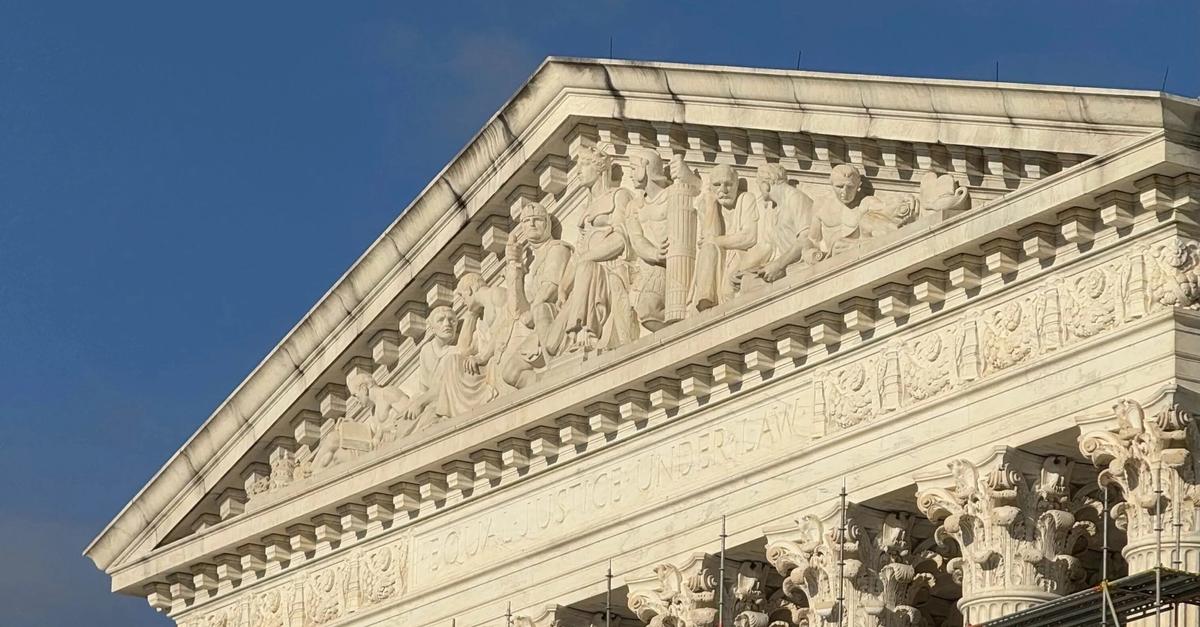
There will be no SCOTUStoday newsletter on Monday in recognition of the Labor Day holiday. We’ll be back in your inboxes on Tuesday. Enjoy the weekend!
Read more Trump administration asks Supreme Court to clear the way for it to implement new mail-in voting rule
If you are interested in attending The SCOTUSblog Summit: 2026 Term Preview on Wednesday, Sept. 16, in Washington, D.C., don’t forget to fill out this registration request.
At the Court
On Thursday, the Trump administration urged the Supreme Court to temporarily pause an order blocking the government from implementing parts of a U.S. Postal Service rule on mail-in ballots. For more on the new interim docket request, see the On Site section below.
Today at 9:30 a.m. EDT, the court will release its third and final summer order list. (We discussed what these lists typically address in our July 13 newsletter.)
Two Republican groups asked the court on its interim docket to block a decision by the U.S. Court of Appeals for the 4th Circuit preventing political parties and joint fundraising committees from paying preferential broadcast rates for political ads. On Thursday, the Democratic candidates who challenged the groups’ access to the lower rates the court to leave the 4th Circuit’s ruling in place. For more on the filing, see the On Site section.
In another interim docket dispute, a Michigan group asked the court to require Michigan election officials to put on the November ballot its proposal for requiring proof of citizenship to vote in the state. On Thursday, Justice Brett Kavanaugh denied that request. Learn more about the dispute in the Morning Reads section.
Morning Reads
Supreme Court refuses to put proof-of-citizenship amendment on Michigan ballot
Kelsey Reichmann, Courthouse News Service
On Thursday, the Supreme Court declined “to take emergency action … to put a proof-of-citizenship amendment on Michigan ballots for the midterm elections,” according to Courthouse News Service. “Americans for Citizen Voting asked the justices to intervene after the Michigan Board of State Canvassers invalidated its proposal” following the board’s determination that the proposal did not have enough valid signatures to be added to the ballot. Justice Brett Kavanaugh denied that request “without referring the appeal to the full court. He did not explain his decision.” Courthouse News Service noted that “Americans for Citizen Voting filed its emergency appeal at the U.S. Supreme Court just days before Michigan ballots were scheduled to be finalized on Friday.”
Mine safety commissioner fired by Trump gives up legal fight, citing Supreme Court
Zach Schonfeld, The Hill
In June, the Supreme Court expanded presidential firing power in Trump v. Slaughter, holding that the president has broad authority over approximately two dozen multi-member agencies that Congress intended to be independent. On Wednesday, Moshe Marvit cited that decision in announcing that he was dropping his lawsuit over President Donald Trump’s effort to remove him from the Federal Mine Safety and Health Review Commission. He said he “disagrees with the high court’s decision but conceded it means the agency is no longer independent,” according to The Hill. “Marvit is among a growing list of fired independent agency leaders who’ve thrown in the towel after the Supreme Court upended 91 years of precedent that had shielded them with firing protections.”
Trump administration aims to strip schools’ tax exemption if they consider race
Susan Svrluga and Danielle Douglas-Gabriel, The Washington Post
On Thursday, the IRS and Treasury Department announced plans to “eliminate tax-exempt status for any private school that discriminates ‘on the basis of race, color, or national or ethnic origin in administration of its educational, admissions, scholarship, athletic, or other policies,’” escalating the Trump administration’s past efforts to prevent schools from considering race in admissions and other areas of campus life, according to The Washington Post. The administration argues that such consideration “violate[s] the law in the wake of a 2023 Supreme Court ruling banning the use of race-conscious admissions.” The new proposal “is subject to a lengthy public-comment period,” and would not go into effect until May 2027, at the earliest. “The agencies estimate that if it takes effect, the rule could affect as many as 18,000 primary and secondary schools, colleges, universities, professional schools, and trade schools.”
Democrats plot crackdown on Supreme Court
Susan Ferrechio, The Washington Times
During an event last weekend in Iowa, Sen. Sheldon Whitehouse of Rhode Island and Rep. Jamie Raskin of Maryland, who are poised to lead the Senate Judiciary Committee and House Judiciary Committee, respectively, if Democrats take control of the House and Senate in November, shared that they have monthly meetings on the future of the Supreme Court, at which they discuss “how they would police Supreme Court justices.” “Mr. Whitehouse and Mr. Raskin said they plan to issue subpoenas, which can be blocked by a filibuster in the Senate but not in the House,” according to The Washington Times. Whitehouse “did not specify who would be targeted with subpoenas, but noted that many questions remain regarding the court’s conservative justices. In particular, he pointed to Justice Clarence Thomas, who bought a $267,230 luxury motor coach using a loan from a wealthy healthcare executive that Senate investigators say was forgiven without repayment.”
On Site
Trump administration asks Supreme Court to clear the way for it to implement new mail-in voting rule
By Amy Howe
The Trump administration returned to the Supreme Court on Thursday afternoon, asking the justices to temporarily pause an order by a federal judge in Boston that blocks the government from implementing parts of a U.S. Postal Service rule on mail-in ballots.
Judge temporarily halts Trump’s latest birthright citizenship order
By Amy Howe
It has been just under a month since President Donald Trump issued a new executive order seeking to narrow the availability of birthright citizenship. On Wednesday, a federal judge in Maryland temporarily blocked the Trump administration from enforcing that order against an expansive group of children whose parents are in the United States temporarily or without proper documentation.
Sen. Jon Ossoff and other Democratic candidates urge justices to leave court ruling in place on political broadcasting rates
By Amy Howe
Four Democratic candidates for the U.S. House of Representatives and U.S. Senate urged the justices to leave in place a ruling by a federal appeals court that limited the availability of preferential advertising rates to candidates for political office. The candidates – former Sen. Sherrod Brown of Ohio, who is running again in that state; Sen. Jon Ossoff, who is running for reelection in Georgia; former Gov. Roy Cooper of North Carolina, who is running for Senate there; and Rep. Kristen McDonald Rivet, who is running for reelection in Michigan – told the justices that “[n]o court has ever held, or even hinted,” that the preferential rates should be more broadly available.
Will the court consider due process rights for detained migrants?
By César Cuauhtémoc García Hernández
In his Immigration Matters column, César Cuauhtémoc García Hernández explored Genalo v. Black, a case on whether the government can indefinitely detain long-term migrants who have been convicted of a variety of crimes without allowing them to ask an immigration judge for release on bond. The case is scheduled to be argued on Oct. 13, although recent developments might convince the court to remove it from its docket.
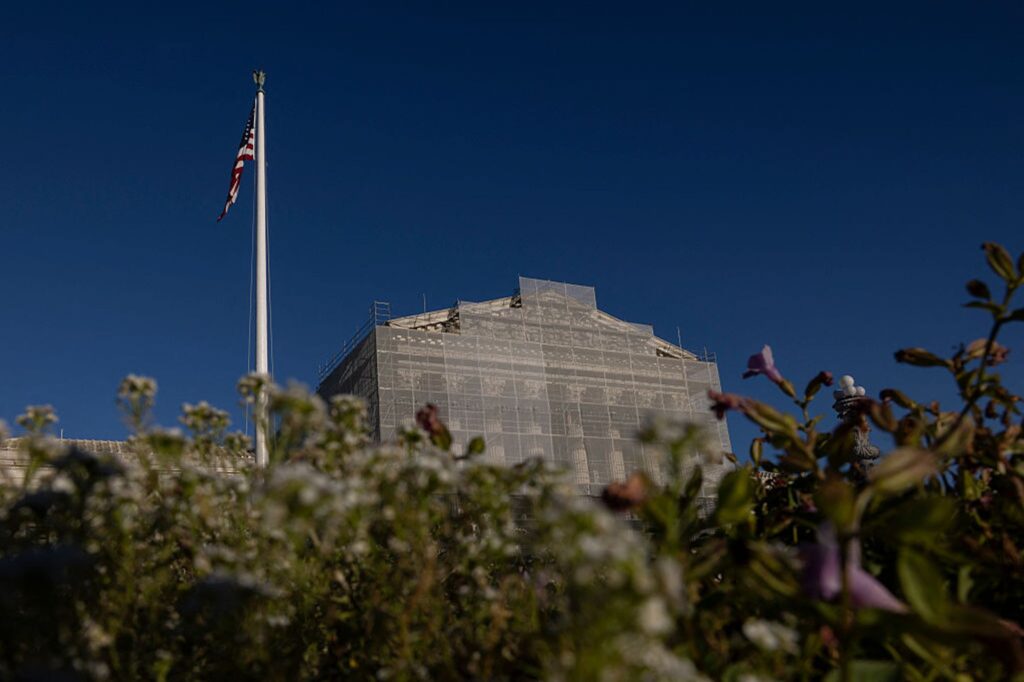
Court reform is liberal-coded nowadays. But it shouldn’t be.
By Gabe Roth
In a column for SCOTUSblog, Gabe Roth contended that “there’s nothing inherently partisan about court reform,” even if Democrats dominate the current discussion of potential changes to make to the Supreme Court. “Improving transparency and accountability in our historically opaque third branch – if done right – would not help one party or another,” Roth wrote.
Podcasts
SCOTUS Majority Rules White House Ballroom Is A Go
Sarah Isgur and David French discuss the 5-4 ballroom interim docket decision with Chief Justice John Roberts leading the dissenters, The New York Times’ piece on releasing the justices’ papers sooner rather than later, and a piece by Josh Morrow on AI in circuit decisions.
Justice Henry Brockholst Livingston
Although Justia describes Henry Brockholst Livingston as having “spent all of his 16 years on the Court in the shadow of Chief Justice John Marshall, writing no memorable opinions,” another biography states that Livingston was the court’s “unofficial expert on commercial law until the arrival of Justice Story.” In any event, Livingston was certainly memorable in other ways – he survived an assassination attempt, killed a man in a duel, and had two “acts of dubious judicial decorum” involving John Quincy Adams and the case of Dartmouth College v. Woodward, respectively.
Livingston was born in New York City in November 1757 to a wealthy and influential family and raised in Elizabeth (then Elizabethtown), New Jersey. His father (for whom the town of Livingston, New Jersey, is named) later became governor of New Jersey. He graduated from the College of New Jersey (now Princeton University) in 1774 with James Madison as a classmate, enlisted in the Continental Army at 19, and was present when British General John Burgoyne surrendered at the Battle of Saratoga in October 1777. Livingston’s rank at the time is disputed: some sources say he was a captain, while others claim a lieutenant colonel. In 1779, he left for Spain as private secretary to his brother-in-law John Jay (yes, that John Jay), although the two were “often at odds.” On his way home three years later, Livingston was captured by the British and imprisoned in New York, although he was paroled after just three weeks as the war came to a close.
Admitted to the bar in 1783, Livingston served three terms in the state assembly and survived an assassination attempt in 1785. He also gave the first Fourth of July speech that was “in the presence of” President George Washington. Justice Joseph Story once described Livingston as having “an aquiline nose, high forehead, bold head, and projecting chin.” The first of those features played into a fatal duel in 1798 after Federalist James Jones tried to “wring [Livingston’s] nose” after Livingston insulted him. Livingston killed Jones, and although Livingston was not prosecuted, he reportedly “never fully recovered” psychologically following Jones’ death.
Livingston drifted into the Jeffersonian camp during the 1790s, and his work helping then-Vice President Thomas Jefferson win New York in 1800 got him a seat on the New York Supreme Court in 1802. In his four years there, Livingston wrote 149 opinions, most famously his dissent in the influential 1805 case of Pierson v. Post, where he argued that a hunter chasing a fox, not the passerby who kills it, has the better claim to the fox (law professor Josh Blackman has described this as the “definitive first year property case”).
Jefferson gave Livingston a recess appointment to Justice William Paterson’s seat in November 1806. The Senate confirmed him by voice vote in December, and he took the oath in January 1807. Used to writing separately in New York, Livingston fell in line with Marshall’s practice of a single opinion and had a relatively small output with only 38 majority opinions, eight dissents, and six concurrences in 16 years by one tally. Contemporaries knew him as “a silent observer” who calmed intra-justice tensions.
Although none of his Supreme Court opinions focused on major constitutional issues, many involved commercial law, such as disputes over notes, bills, and insurance policies. In 1818’s Dugan v. United States, he held that the federal government could enforce its contracts because “[i]t would be strange” to deny it “a right which is secured to every citizen of the United States.” Story, for his part, called him a “very able and independent judge.”
Livingston has also been remembered for less savory reasons, however. He apparently told then-counsel John Quincy Adams how 1810’s Fletcher v. Peck, the first time the Supreme Court held a state law unconstitutional, would come out before the court announced the decision, and in 1819’s Dartmouth College, his vote was reportedly influenced by extra-judicial conversations with Chancellor of New York and former colleague James Kent, who supported the majority’s position.
Livingston fell ill during the 1823 term and died in Washington at age 65. Justice Smith Thompson, nominated by President James Monroe, took Livingston’s seat on the court. Livingston’s death ended an 11-year period of an unchanged bench, then the longest period of such in the Supreme Court’s history.
SCOTUS Quote
MR. KOERNER: “But if the shipment is done with the intent of avoiding taxes, which was contemplated by this statute –”
JUSTICE SCALIA: “That’s not what it says. It makes it unlawful to knowingly ship it when they bear no evidence of payment of applicable taxes, and –”
MR. KOERNER: “– That’s correct. There’s a question of proof.”
JUSTICE SCALIA: “– there is no applicable taxes at the time that they ship it.”
MR. KOERNER: “But if you look at the legislative history, it was directly –”
JUSTICE SCALIA: “Oh, I don’t look at legislative history.”
— Hemi Group LLC v. City of New York (2009)