
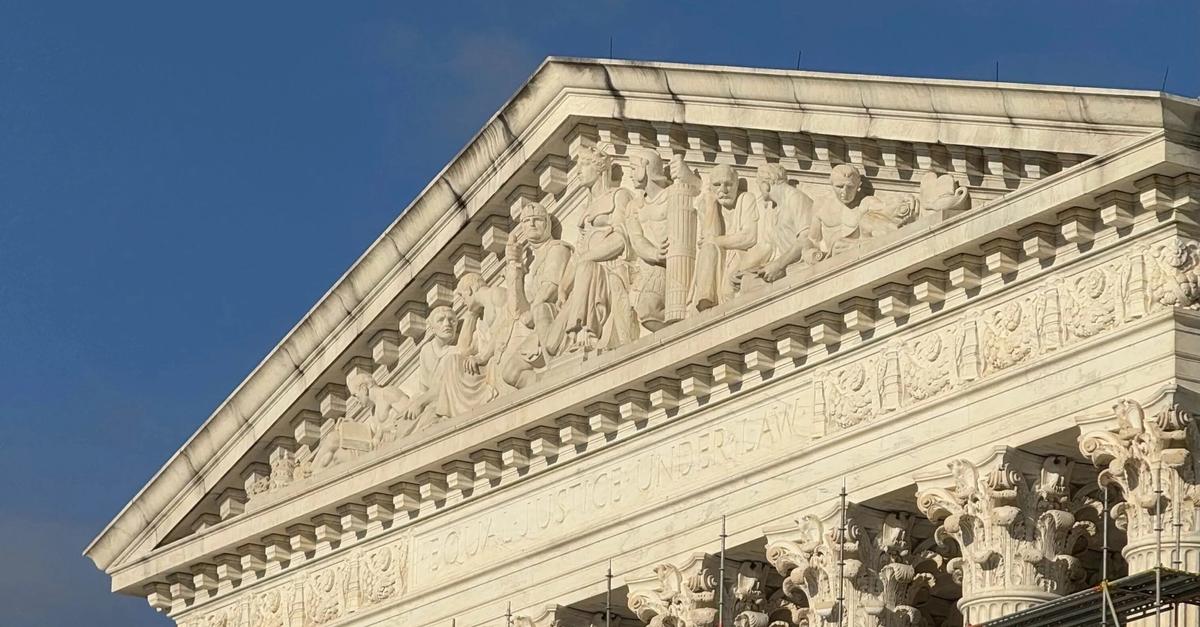
On this day in 2009, then-President Barack Obama nominated Sonia Sotomayor to the Supreme Court.
Read more The Supreme Court and social media
At the Court
On Thursday, the justices met in a private conference to discuss cases and vote on petitions for review. Orders from that conference are expected this morning at 9:30 a.m. EDT.
The court has indicated that it may announce opinions on Thursday at 10 a.m. EDT. We will be live blogging that morning beginning at 9:30.
Morning Reads
Oral arguments are taking forever. Supreme Court justices have had enough
John Fritze, CNN
Oral argument sessions at the Supreme Court are getting longer, and it’s prompting a debate about whether something needs to change. “The average length of arguments in the current term clocked in at just under 90 minutes, according to a CNN analysis. That’s up nearly 10 minutes from the term that began in 2020, when the court heard arguments remotely because of the pandemic.” Chief Justice John Roberts and Justice Samuel Alito recently have shared their interest in finding a way to shorten arguments, while Justice Clarence Thomas has joked that he could sit in the courtroom “all day.” Emory University law professor Tonja Jacobi told CNN that part of the value of argument sessions is that they help regular people better understand the court’s work but noted that longer arguments “become a little less accessible.”
Supreme Court’s John Roberts Faces Impeachment Resolution from Democrat
Jason Lemon, Newsweek
On Thursday, Rep. Steve Cohen, a Democrat from Tennessee, introduced a “long-shot effort” to impeach Chief Justice John Roberts “centered on allegations that the Supreme Court under his leadership has acted in a partisan and inconsistent manner,” according to Newsweek. “In a statement announcing the resolution, Cohen said that Roberts has led the court to be ‘understood as biased: with decisions designed to benefit Republicans at the expense of representative government, seemingly contradictory and unexplained orders, and a pattern of ethical breaches that raises questions about the role of the wealthy.’”
US Companies Shamed by Trump Tiptoe Into Tariff-Refund Race
Laura Curtis, Rachel Phua, and Ignacio Gonzalez, Bloomberg
According to a Bloomberg analysis, “[o]nly about 5% of the 3,000 largest publicly traded US companies mentioned refunds in the context of President Donald Trump’s now-illegal tariffs in recent comments and regulatory filings.” Bloomberg noted that such companies are staying quiet about tariff refunds in hopes of reducing “the risk of political and legal jeopardy” that comes with claiming them. That risk became clear when President Donald Trump “paint[ed] refund backers as unpatriotic after the Supreme Court struck down” his signature tariffs. “Saying too much about refunds invites not just Trump’s scorn but also legal challenges from consumers clamoring for a piece of the payout.”
Mahmoud Khalil to Appeal to Supreme Court in Effort to Halt Deportation
Jonah E. Bromwich, The New York Times
On Friday, the full U.S. Court of Appeals for the 3rd Circuit declined to review the case of Mahmoud Khalil, “a Columbia University graduate who was arrested by Immigration and Customs Enforcement agents last March and quickly became the face of President Trump’s crackdown on pro-Palestinian campus demonstrators.” Khalil, “a legal permanent resident who is married to an American,” had asked the full 3rd Circuit to revisit a panel’s decision allowing his case to proceed in immigration court without a federal district court first weighing in on the constitutional issues involved, according to The New York Times. “Mr. Khalil’s lawyers have already asked the Third Circuit to halt the impact of its Friday decision while they appeal to the Supreme Court on those jurisdictional issues.”
Lawyers challenge Roundup cancer settlement as Supreme Court ruling nears
Maureen Groppe, USA Today
As Monsanto awaits a Supreme Court ruling that may bar users of its Roundup weedkiller from suing it for not including a cancer warning on Roundup’s product label, the company is pursuing a separate effort to resolve such lawsuits: a $7.25 billion class-action settlement. Initially, that settlement was on track to be finalized this summer, around the time the justices issue their ruling, but now the lawyers behind the Supreme Court case “are trying to derail” it by seeking to move the settlement proposal from state to federal court and by contending that it “won’t adequately compensate people who believe they’ve been sickened by Roundup,” according to USA Today. Bayer, which acquired Monsanto in 2018, “hopes that both the Supreme Court and the pending settlement will limit the extent of future lawsuits.”
On Site
A history of Supreme Court leaks
By Amy Howe
Last month, The New York Times published a major scoop: the inside story of the Supreme Court’s 2016 order blocking then-President Barack Obama’s Clean Power Plan on its interim docket. The story was made possible by a leak of internal memos. How common are such leaks in the court’s history?
Justices agree that actuaries can use up-to-date assumptions in assessing costs of leaving a multi-employer pension plan
By Ronald Mann
Thursday’s decision in M&K Employee Solutions v. Trustees of the IAM National Pension Fund was pretty much exactly what you would have expected given the argument: a brisk rejection of the idea that the Employee Retirement Income Security Act of 1974 obligates actuaries to use out-of-date assumptions when they work on pension plans.
The Supreme Court and social media
By Cortez Collins
The Supreme Court shapes constitutional and statutory meaning in an era defined by rapid technological change. But, despite presiding over disputes that involve online conduct, the court itself is strikingly absent from that world. This absence is especially notable in social media. Can – or should – the court continue to remain so disconnected?
Read more Racial considerations in voting rights and immigration policy on the last day of oral argument
Podcasts
Ninja Court Packing
Will Baude and Dan Epps are joined by Professor Pam Karlan for a live show at the American Law Institute Annual Meeting to work through a busy stretch of the interim docket and looming merits decisions on executive power. They then answer audience questions on state voting rights acts, fixing the single-member-district statute, and whether you can wish yourself more wishes.
Bench vs. Slip Opinions
It’s time to delve into our favorite thing – SCOTUS minutiae. As SCOTUSblog readers know, we host a live blog on opinion days. Almost immediately after an opinion is announced, it becomes available on the court’s website, and a member of the SCOTUSblog team will then post a link to it on the live blog. This is labeled a “slip opinion.” However, as we’ve explained, Amy is typically in the court’s press room when opinions come down, and she (along with the other reporters present) receives paper copies of the opinions from the court’s staff. The paper copy that Amy receives (which is also available to members of the public about 30 minutes after opinion announcements) is labeled a “bench opinion.”
But what in the world is the difference between a “bench” and a “slip” opinion? Why the heck aren’t they just called … opinions?
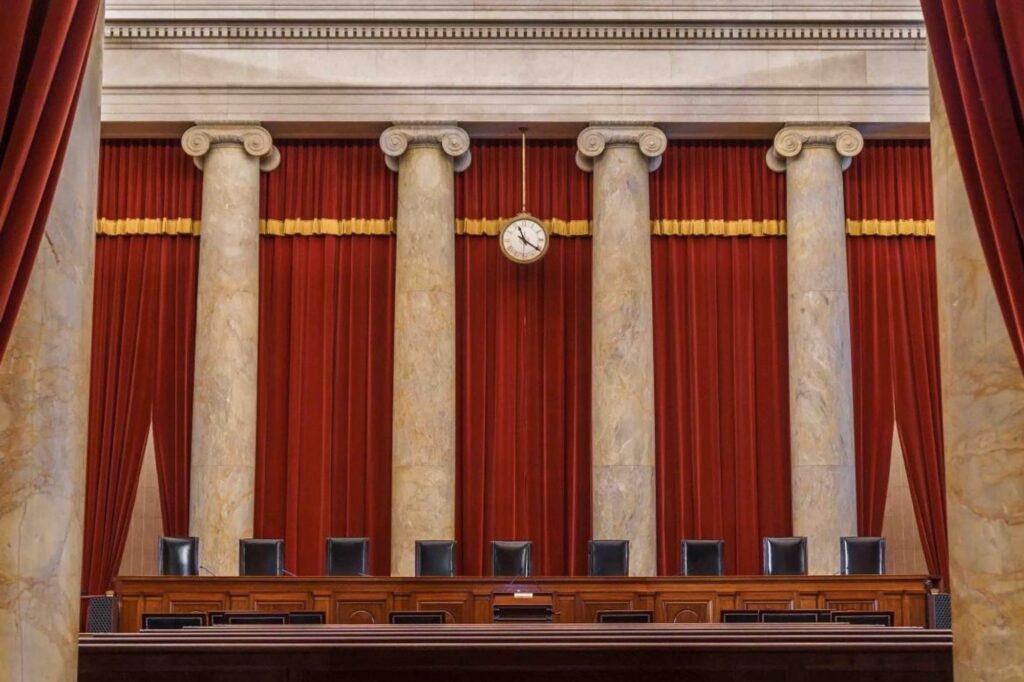
Let’s start with bench opinions. This practice emerged when the court moved into its current home in 1935 and adopted a “” approach to issuing decisions. Specifically, several members of the press sat at desks between the justices sitting on the bench and the counsel’s podium. When a justice announced a decision, members of the court’s staff would hand paper copies to these journalists. The journalists would then send the copies of the opinion down a floor to their coworkers in the press room through (picture the tubes used at a bank drive-up window – or in the movie Brazil). From there, the reporters would write their stories about the case (or cases) as quickly as possible for publication. Although the pneumatic tubes and reporters’ desks in the courtroom are gone (Chief Justice Warren Burger had them – and the reporters – removed in 1971 when he had a curved bench installed), the term bench opinion remains.
So what is a slip opinion? Slip opinions were originally opinions printed on loose “slips” of paper that could be inserted into printed volumes of cases. The slip opinion typically came out later then the bench opinion and might have corrections or edits that did not appear in the bench opinion – although now that a version of the slip opinion is posted online they are generally identical. That said, the online slip opinion may be updated from time to time for any errors as the publication process is completed, which occurs when these are placed into the volumes of the United States Reports. Slip opinions are also available in the Public Information Office (at least those from the ).
But what, today, is the substantive difference between a bench and slip opinion? The answer is not much. While historically there was some delay between the bench opinion being distributed and the release of slip opinions a few days later, technology has shortened that delay to become almost nonexistent. So then why keep that particular distinction at all? Because, above all else, as the court’s website states, the Supreme Court “is deeply tied to its traditions.”
SCOTUS Quote
JUSTICE KENNEDY: “And that if there was fraud on the market, that is a materiality question addressed at the certification stage, but if the class isn’t certified, the investor can still show that he had had direct reliance that was reasonable?”
MR. WAXMAN: “Yes.”
JUSTICE KENNEDY: “Am I – am I right about that? Or –”
MR. WAXMAN: “You are – you are either right or wrong, depending on how I understood you. Let me –”
(Laughter.)
MR. WAXMAN: “Let me start with you’re right, Justice Kennedy, you’re absolutely right.”
Read more A brief guide to each chief justice of the United States
JUSTICE KENNEDY: “Do the first part.”
— (2012)