
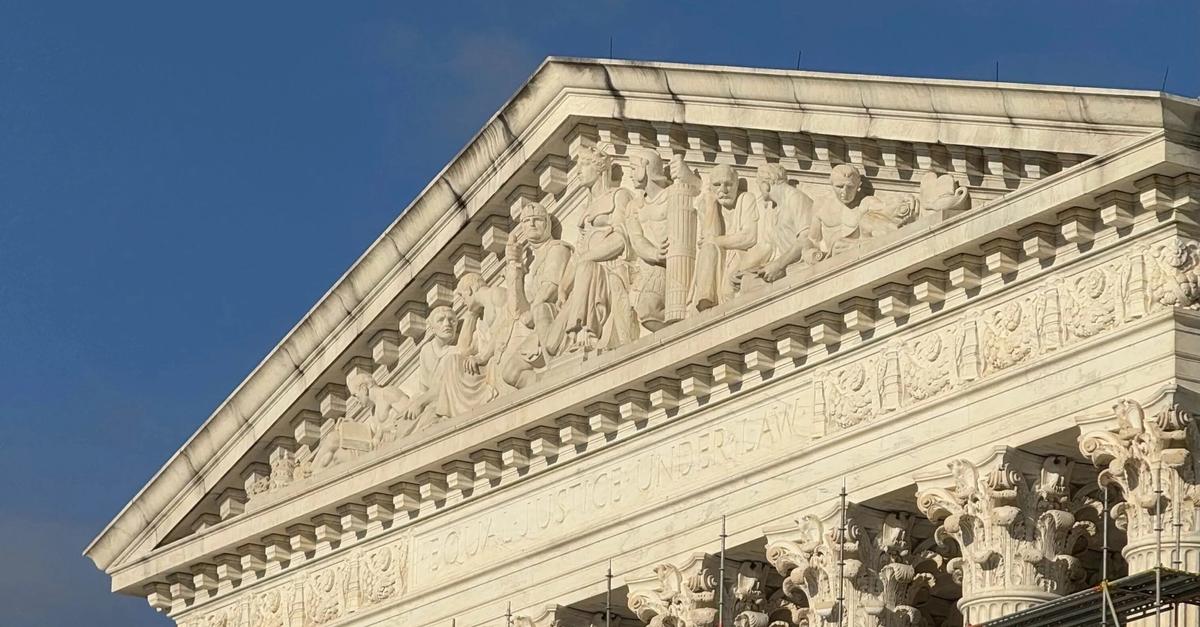
On this day in 1918, the court decided Hammer v. Dagenhart, invalidating a law meant “to prevent interstate commerce in the products of child labor.” The case was overturned 23 years later, when the court upheld the Fair Labor Standards Act.
At the Court
Tuesday night, the Supreme Court for Alabama to use a congressional map in the 2026 elections that lower courts found to be racially discriminatory. Justice Sonia Sotomayor wrote a dissenting opinion, joined by Justices Elena Kagan and Ketanji Brown Jackson.
The court has indicated that it may announce opinions on Thursday at 10 a.m. EDT. We will be live blogging that morning beginning at 9:30 a.m.
After the possible announcement of opinions tomorrow, the justices will meet in a private conference to discuss cases and vote on petitions for review. Orders from that conference are expected on Monday, June 8, at 9:30 a.m. EDT.
Morning Reads
Usha Vance says Supreme Court, federal judges should be treated with ‘respect’
Hannah Demissie, ABC News
In an interview with ABC News that aired Monday night, second lady Usha Vance, who previously clerked for Chief Justice John Roberts and then-Judge Brett Kavanaugh on the U.S. Court of Appeals for the District of Columbia Circuit, addressed the recent surge in personal criticism of the justices and attacks on judges. “I have a lot of respect for the justices,” she said. “I think that they have a hard and challenging job being in the public eye. … I think that there has been a lot of personalization of feelings towards judges and the courts across the country that probably didn’t exist, you know, 150 years ago when they were less in the public eye.” “I’m hopeful,” Vance continued, “that people will continue to treat them with the sense of humanity and you know, without the kind of anger that’s led to some attacks on judges.” “The second lady did not mention the attacks launched by Trump against the Supreme Court and several federal judges who had ruled against him.”
Trump administration proposes 25% tariffs on Brazil despite extensive US trade surplus
Paul Wiseman and Mauricio Savarese, Associated Press
Following “an investigation by the Office of the U.S. Trade Representative,” the Trump administration on Monday “proposed 25% tariffs on imports from Brazil, charging that the world’s 10th-biggest economy engages in trade practices that are ‘unreasonable’ and that ‘burden or restrict U.S. commerce,’” according to the Associated Press. “Last year, Trump had slapped Brazil with a 50% tariff, mainly to protest its prosecution of Jair Bolsonaro for trying to overturn his electoral defeat in 2022.” But the “Supreme Court ruled in February that Trump overstepped his authority by using … the International Emergency Economic Powers Act … to impose sweeping tariffs on U.S. trading partners, including Brazil.” The administration relies on Section 301 of the Trade Act of 1974 in its current push to hit Brazil with new tariffs.
Courts may deliver the anti-vaccine movement’s biggest win
Lauren Weber, The Washington Post
As they confront setbacks in their push to alter the childhood vaccine schedule and end vaccine mandates, the anti-vaccine movement is looking to the Supreme Court for a major future victory on the issue of whether the First Amendment includes a right to religious exemptions from vaccine mandates, according to The Washington Post. “The Supreme Court signaled in December that it may be open to a constitutional claim based on the lack of a religious exemption for vaccine mandates in New York, one of five states that do not allow such exceptions. The high court sent the case, involving Amish parents, back to a lower federal appeals court” for further proceedings. “Legal watchers say that case, as well as others moving through the courts in West Virginia and California, could be the anti-vaccine movement’s best hope of a national legal win.”
Appeals court tosses kids’ challenge to Trump energy orders
Zach Schonfeld, The Hill
On Tuesday, a U.S. Court of Appeals for the 9th Circuit panel “threw out a lawsuit brought by 22 young people that challenged President Trump’s executive orders setting federal energy policy,” ruling that the children and young adults do not have legal standing “to sue over claims the policies are endangering their health and the climate,” according to The Hill. “In reaching their decision, the judges pointed to a lawsuit that young Americans filed in 2015 against the federal government similarly alleging various policies were contributing to climate change. Judges dismissed that case for lack of standing, too, and the Supreme Court last year declined to take up the young people’s appeal.”
On Site
Supreme Court permits Alabama to use congressional map struck by lower court as racially discriminatory
By Amy Howe & Kelsey Dallas
The Supreme Court on Tuesday night cleared the way for Alabama to use a congressional map in the 2026 elections that lower courts found to be racially discriminatory. In a four-page, unsigned order, the court held that “the District Court’s analysis departed from” the Supreme Court’s April 29 decision in Louisiana v. Callais, in which the court (among other things) made it more difficult for plaintiffs to prevail on a claim that a map violates a key provision of the Voting Rights Act.
Read more The radical Justice Thomas
The state of the death penalty at the Supreme Court
By Kelsey Dallas
Three recent rulings from the Supreme Court continued a trend that SCOTUSblog columnist Daniel Harawa highlighted last year – namely, that death row inmates find more success on the court’s oral argument docket than on its emergency docket, where the justices address requests for stays of execution. Indeed, as Kelsey explained, “more success” might be an understatement.
The radical Justice Thomas
By Erwin Chemerinsky
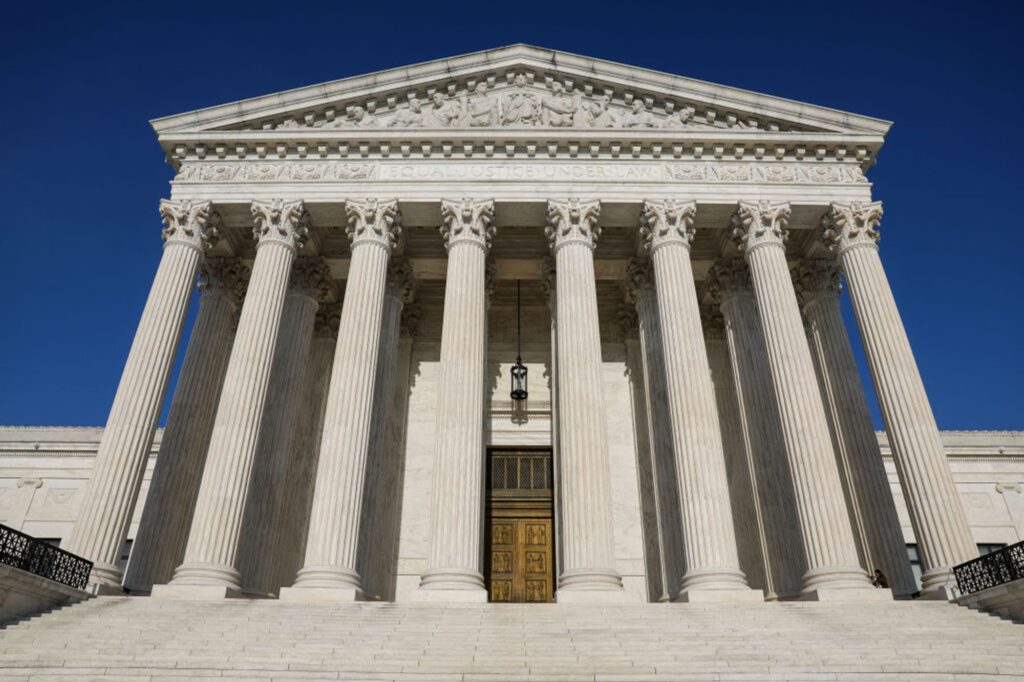
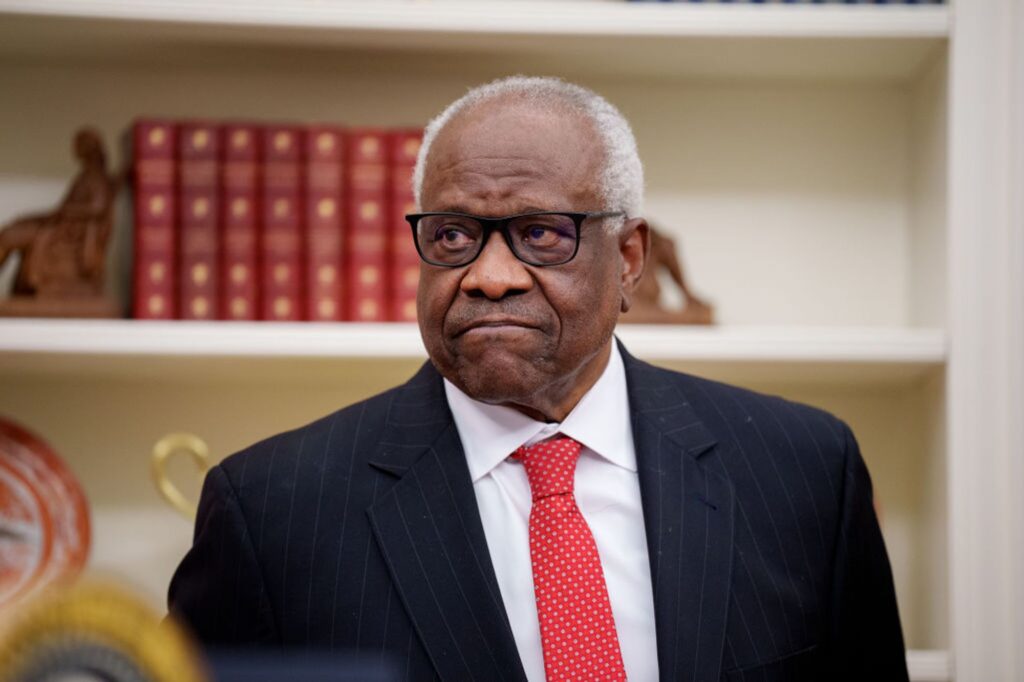
In his Courtly Observations column, Erwin Chemerinsky reflected on Justice Clarence Thomas’ “desire to radically change the law,” contending that “in ideology he is easily one of the most radical [justices] to ever serve on the court.”
Podcasts
President Trump’s Losing Streak
Sarah Isgur and David French discuss major Trump losses – Kennedy Center name change, motion on Trump v. IRS, and injunction on the slush fund – before reviewing scrutiny of the court and the swatting incident at Justice Amy Coney Barrett’s residence.
Ask Amy
What does it mean when the Supreme Court docket for a case says “Record requested”?
When a litigant files a petition seeking Supreme Court review, the court’s rules specify that an appendix to that petition must contain the lower courts’ decisions and orders, including any orders denying rehearing, and “any other material” the litigant seeking review “believes essential to understand the petition.” But normally the justices do not have all of the materials – such as the transcripts from the trial or the briefs – in front of them when they decide whether to take up a case.
If the court grants review of the case, it will ask the lower court to send it a copy of the record (which often, although not always, is available electronically). But sometimes the court may ask for the record before it acts on a petition for review. (The conventional wisdom, although this is not written down anywhere, is that a single justice can “call for the record.”)
Sometimes the call for the record can be the precursor to what’s known as a summary reversal – reversing the lower court’s ruling without additional briefing or oral argument – or a “GVR,” in which the court and sends the case back for another look. Other times, the call for the record can mean that at least one justice wants to take a closer look at the case, hopes to pick up a fourth vote to grant review, or is writing a dissent from the denial of review. There’s no way to know for sure until the court actually acts on the petition for review. That said, in the last few terms, cases in which the court has called for the record and then granted oral argument and review on the merits have been extremely rare.
SCOTUS Quote
MR. FEIGIN: “Your Honor, I wouldn’t say they define the discretion either. I think they are a recommendation and information that informs the exercise of discretion – ”
Read more The state of the death penalty at the Supreme Court
CHIEF JUSTICE ROBERTS: “What if – I’m sorry. Are you finished?”
MR. FEIGIN: “I’m happy to be, Your Honor.”
(Laughter.)
CHIEF JUSTICE ROBERTS: “A good – good advocate.”
— (2013)